
PP Synthetic Paper Label Material
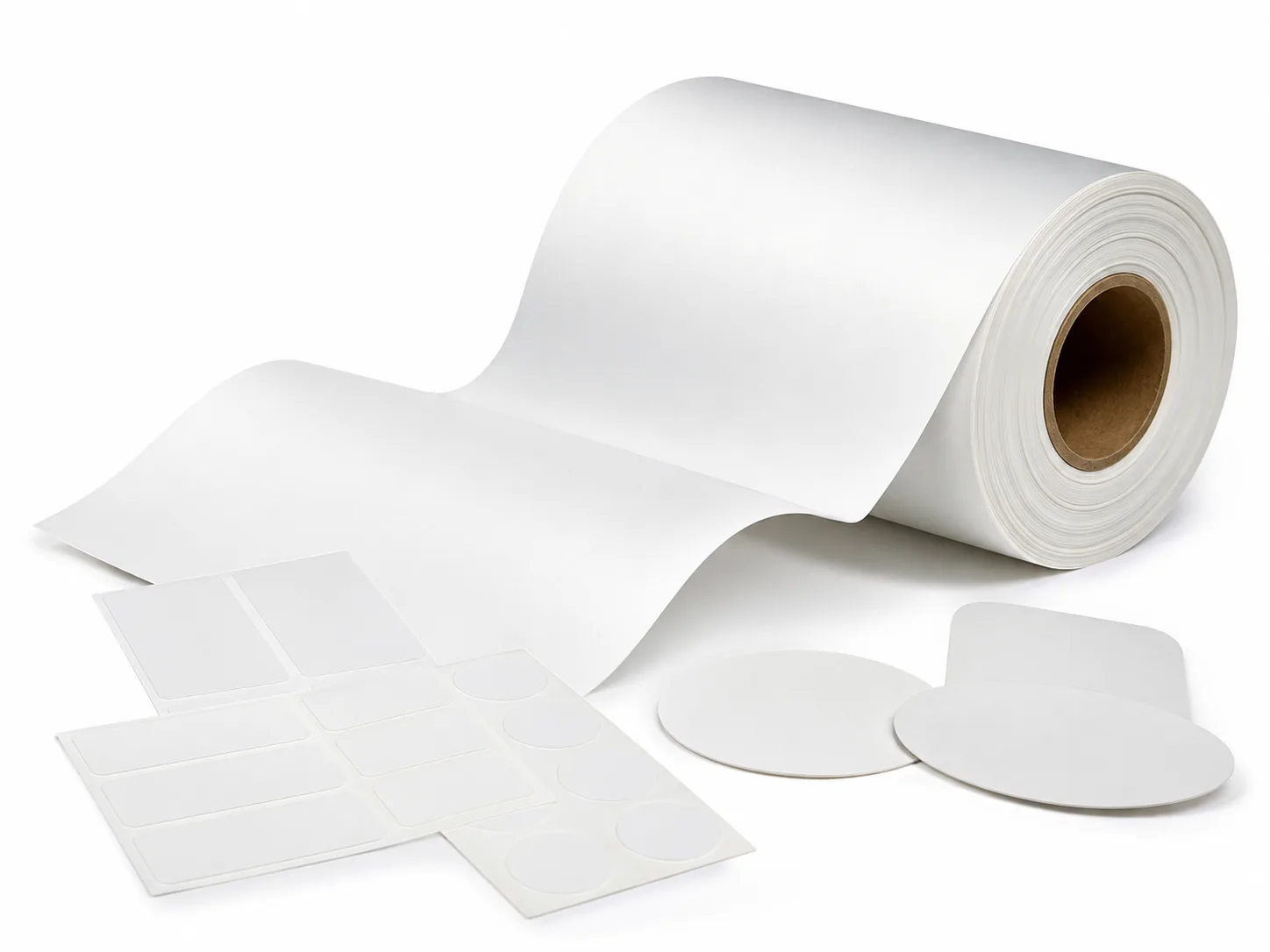
Polypropylene synthetic paper is a film-based facestock with a paper-like finish. In a self-adhesive label construction, it is combined with an adhesive and release liner. The print process, packaging surface and service conditions determine which construction to choose.
Quick answer
Selecting synthetic paper labels? Specify the print process, the surface to be labeled and the expected exposure. A paper-like finish alone does not establish ink adhesion, chemical resistance or outdoor life.
Key specifications
| Facestock | PP synthetic paper, white |
|---|---|
| Face thickness | 80–120 µm |
| Finish | Matte paper-feel, printable |
| Adhesive | Permanent acrylic, removable, freezer, high-tack (water-based or hot-melt) |
| Release liner | White glassine, PET, or CCK/kraft |
| Formats | Jumbo roll, log roll, finished slit rolls |
| Max width | Up to 1,600 mm |
| Core sizes | 25 mm (1 in) / 76 mm (3 in) |
| MOQ | From 1 jumbo roll (stock), 3,000–5,000 m² (custom) |
| Certifications | ISO 9001 / ISO 14001 |
What to confirm before ordering
Use these details to narrow the material selection and plan a trial. The checks below are selection guidance, not published test results for an AllinLabel grade.
| Requirement | Details to provide | Check before approval |
|---|---|---|
| Printing | Press or printer model, ink or toner, and any varnish | Grade compatibility, image quality and ink adhesion after the agreed drying or curing process |
| Water and condensation | How the label gets wet, contact duration and container surface | Printed image readability, edge lift and adhesion after exposure |
| Cleaning or chemical contact | Chemical name, concentration and contact conditions | The face, printed image and adhesive under the intended exposure |
| Heat, cold or outdoor use | Application temperature, service conditions and intended label life | The complete construction against documented limits and the agreed exposure check |
| Die-cutting and handling | Label shape, perforations, folds and converting process | Cut-edge quality, matrix stripping, dispensing and the finished label's handling performance |
| Roll supply | Roll width, length, core, maximum outer diameter and order quantity | Available construction, machine fit, sample format, MOQ and lead time in the quotation |
Why choose PP synthetic paper
Paper-like finish
A film-based face for labels that need a paper-like appearance. Review a sample for finish, opacity and handling feel before approving artwork.
Moisture exposure
Assess the printed label, not only the unprinted face. Check whether the image remains legible and whether the adhesive holds on the actual container after the expected water exposure.
Printing and writing
Match the surface to your press and ink system. If the label needs handwritten information, include the intended pen or marker in the sample check.
Converting and handling
Include die-cutting, matrix stripping and label application in the trial. Inspect cut edges and any folds or perforations that the finished label will use.
How to specify label perforations →
Typical applications
Product identification labels
For packaging that needs a paper-like label appearance. Match the adhesive to the container and review the printed result under its actual storage conditions.
Horticultural identification labels
For evaluating plant and nursery labeling jobs. State the exposure to irrigation, sunlight and handling, together with the required label life.
Equipment identification labels
For evaluating labels that are handled or cleaned during use. Identify the cleaning agents and contact conditions before selecting a construction.
Adhesive & liner options
Specify the container surface, whether the label must stay attached or be removed, and the temperature at application. Select the adhesive and release liner for the complete construction, including die-cutting and dispensing. Confirm the available combination for the requested grade rather than assuming every adhesive is offered with every face.
Related materials
Buying this material for converting? See jumbo roll and slit roll supply options for PP synthetic label stock rolls and match the facestock, adhesive and liner in one specification.
Frequently asked questions
How does PP synthetic paper differ from traditional paper?
PP synthetic paper uses a polypropylene-based face rather than a conventional paper face. Compare samples for appearance and handling, then assess the printed label under its intended exposure. The face alone does not establish the durability of the ink or adhesive.
Is it the same as white BOPP label material?
Both descriptions refer to polypropylene-based faces, but they are not interchangeable grade specifications. Compare the finish, thickness, surface treatment and print compatibility of the actual materials rather than choosing by the polymer name alone.
Can it run on my printer or press?
Send the equipment model and ink or toner system before selecting a grade. Do not assume a surface intended for one printing process is suitable for another, including laser printing. Use a trial to check image quality and ink adhesion.
Is a water-resistant face enough for a wet or outdoor label?
No. The printed image, adhesive and container surface also need to suit the job. For outdoor use, specify sunlight exposure and the intended label life; a water-resistance claim does not establish UV durability.
Which adhesive and liner should I request?
Describe the container, surface condition, application temperature and whether removal is required. Include the die-cutting and dispensing process when selecting the liner. Ask for the available combination for the chosen face rather than an unspecified adhesive upgrade.
What roll specifications and MOQ should I confirm?
Provide the roll width, length, core size, maximum outer diameter and expected order quantity. Request MOQ and lead time for that construction and format. Do not treat one stock item's order terms as the terms for every custom combination.
What should I send when requesting samples?
Send the print process, label dimensions, container surface and exposure conditions. State whether you need a swatch for initial review or a roll for a converting trial. Confirm sample format, availability, charges and freight before shipment.
Request PP synthetic paper samples or a quote
Send your print process, label size, container surface, roll requirements and order quantity. Include any water, heat or chemical exposure so the sample request and quotation address the actual job.