
Thermal Transfer Label Material
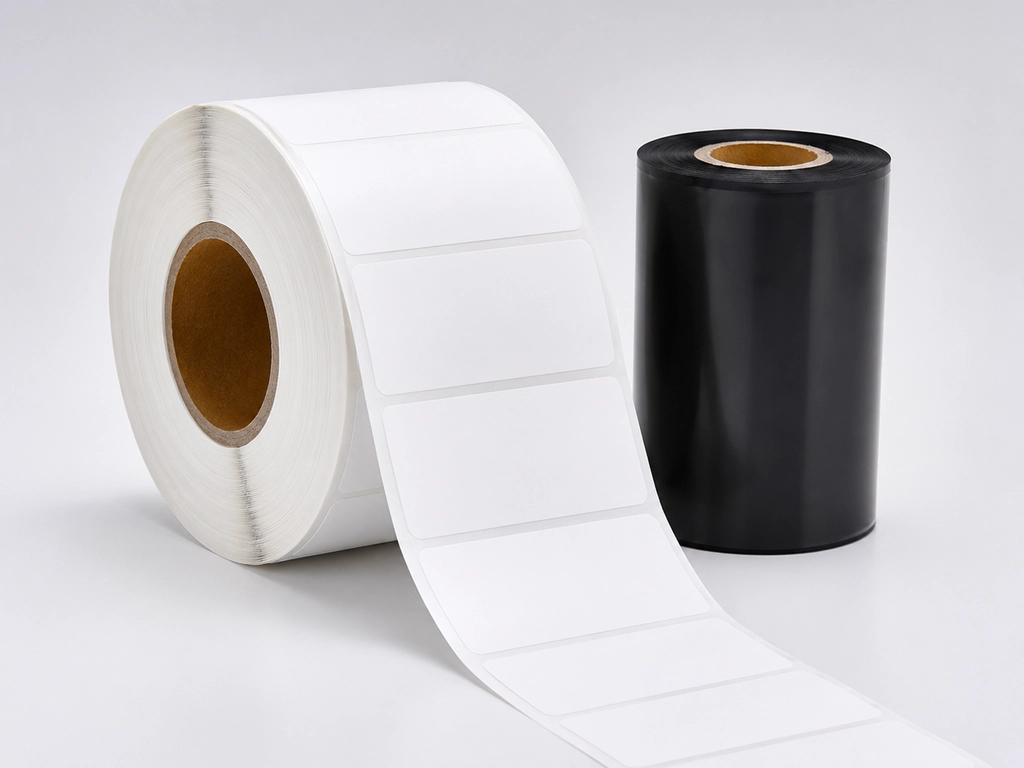
Thermal transfer label material is a facestock printed by melting ink from a ribbon onto the surface, producing durable, long-lasting images. Available in paper and synthetic grades, it suits product identification, asset and barcode labels that must resist fading, heat and handling.
Quick answer
Thermal transfer label material is a paper or synthetic facestock printed by melting ink from a wax, wax-resin or resin ribbon onto its ribbon-receptive top-coat, giving a durable, long-lasting image. It is used for asset, warehouse and pharmaceutical barcode labels that must resist fading, heat and handling over months or years.
Key specifications
| Facestock | Thermal transfer paper or synthetic |
|---|---|
| Face | 80 gsm paper / film grades |
| Finish | Ribbon-receptive top-coat |
| Adhesive | Permanent acrylic, removable, freezer, high-tack (water-based or hot-melt) |
| Release liner | White glassine, PET, or CCK/kraft |
| Formats | Jumbo roll, log roll, finished slit rolls |
| Max width | Up to 1,600 mm |
| Core sizes | 25 mm (1 in) / 76 mm (3 in) |
| MOQ | From 1 jumbo roll (stock), 3,000–5,000 m² (custom) |
| Certifications | ISO 9001 / ISO 14001 |
Why choose thermal transfer
Durable, long-life printed image
The transferred ink resists heat, light and rubbing, so codes stay scannable for years.
Wax, wax-resin or resin ribbons
Match ribbon chemistry to the facestock and environment, from office use to harsh industry.
Paper and synthetic grades
Economical coated paper for indoor use, or PET film where waterproofing is required.
Sharp barcodes and small text
High edge definition keeps 1D and 2D codes readable at small sizes and high speeds.
Typical applications
Product & asset identification
Rating plates, asset tags and industrial part labels needing long-life marking.
Learn more →Logistics & warehouse
Pallet, location and inventory labels that must survive months of handling.
Learn more →Pharmaceutical & healthcare
Specimen, dosing and traceability labels requiring durable, legible print.
Learn more →
Compare with related thermal materials
Selection depends on label life, printer, ribbon, adhesive and service environment.
Thermal transfer
Best for: Durable barcode, inventory, industrial and longer-life labels
Watch-outs: Requires a matched ribbon; test the ribbon and facestock together
This page →Direct thermal
Best for: Short-life logistics and retail labels printed without a ribbon
Watch-outs: Sensitive to heat, light, abrasion and long storage
Direct thermal →Coated paper facestock
Best for: Economical indoor thermal transfer labels with wax or wax-resin ribbon
Watch-outs: Limited moisture, oil and abrasion resistance
Semi-gloss paper →Synthetic facestock
Best for: Tear-, moisture- and chemical-resistant labels with resin ribbon
Watch-outs: Higher cost; ribbon matching is critical for scratch resistance
Thermal synthetic →
Ribbon compatibility
Ribbon choice sets the print durability. Confirm the combination on your own printer before bulk production.
| Ribbon | Typical facestock | Typical use |
|---|---|---|
| Wax | Coated and uncoated paper labels | Economical indoor use, short to medium label life |
| Wax-resin | Coated paper and some films | Stronger smudge and scratch resistance, mixed handling |
| Resin | Synthetic films (PP, PET) | Higher resistance applications: chemicals, abrasion, longer service |
When this material may not be the best fit
Thermal transfer adds a consumable. If the label only needs to last days — shipping, weigh-scale or pick-and-pack — direct thermal removes ribbon cost and handling.
Print durability depends on the ribbon and facestock working together. Run a ribbon and material test on your own printer before a bulk order, especially for resin ribbons on synthetic film.
Adhesive & liner options
Thermal transfer facestocks pair with permanent acrylic, removable, freezer or high-tack adhesives on white glassine, PET or CCK/kraft liners, slit to your printer's roll and core spec.
Related materials
Not sure whether the job needs a ribbon? direct thermal vs thermal transfer label materials by print life, exposure, facestock, adhesive and roll format before ordering.
Buying this material for converting? See jumbo roll and slit roll supply options for thermal transfer label stock jumbo rolls and match the facestock, adhesive and liner in one specification.
Before requesting a quote
Have these details ready so we can propose a construction instead of a generic price.
- Printer brand, model, printhead resolution and print speed
- Ribbon type in use or required: wax, wax-resin or resin
- Facestock: coated paper, PP synthetic or PET film
- Label size, roll width, core size, labels per roll and winding direction
- Adhesive requirement: permanent, removable, freezer or high-tack
- Liner requirement for die-cutting and applicator dispensing
- Service environment: abrasion, moisture, chemicals, temperature, label life
- Barcode grade or scan verification requirement
- Annual volume, first-order volume and ribbon/material trial requirement
Request samples, MOQ and lead time
To check availability, sample options and lead time, send us your application, label size, roll width, facestock, adhesive, liner, printing method and estimated order volume. Our team will recommend a suitable construction and confirm whether a sample roll or trial order is available.
Selection depends on container, adhesive, liner, printing method and service environment. We confirm every construction against your own substrate and line conditions before bulk production.
Frequently asked questions
What is thermal transfer label material?
Thermal transfer label material is a paper or synthetic facestock with a ribbon-receptive top-coat, printed by melting pigment from a wax, wax-resin or resin ribbon onto the surface. Because the image sits as cured ink rather than a heat reaction in the paper, it resists fading, heat and rubbing far longer than direct thermal printing.
It is specified for warehouse and asset barcodes, pharmaceutical and laboratory labels, work-in-process identification and any archive label that must scan reliably after months or years in storage.
Pair facestock and ribbon deliberately: wax for paper and light handling, wax-resin for mixed use, resin with synthetic faces for chemicals, heat and abrasion. Then set adhesive for the substrate and service temperature and liner for your applicator. Real durability depends on the ribbon, printer energy and environment — confirm with sample testing.
What is thermal transfer label material?
A label stock printed by melting ink from a ribbon onto the facestock, giving a durable, long-lasting image for barcodes and product identification.
What ribbon does thermal transfer use?
Wax ribbons for paper, wax-resin for tougher labels, and resin for maximum resistance on synthetic facestocks.
Is thermal transfer more durable than direct thermal?
Yes. The transferred image resists heat, light and abrasion far better, so it suits long-life and harsh-environment labels.
Can thermal transfer print on film labels?
Yes, with a synthetic (PET) facestock and a resin ribbon for waterproof, chemical-resistant labels.
How long do thermal transfer labels last in service?
Thermal transfer print is designed for long-term legibility — with a resin ribbon on a synthetic facestock, labels can remain scannable for years of outdoor or industrial exposure; exact service life depends on facestock, ribbon and adhesive combination and is confirmed on the datasheet.
What liner and die-cutting options are available for thermal transfer rolls?
Thermal transfer paper and synthetic facestocks are supplied on white glassine, PET or CCK/kraft liner, matrix-stripped and die-cut to your label shape, on 25 mm (1 in) or 76 mm (3 in) cores, slit to your printer's roll width.
What roll widths and MOQ apply to thermal transfer label material?
Rolls are available up to 1,600 mm wide, from a single jumbo roll for stock grades, with custom facestock or adhesive combinations from 3,000–5,000 m². Request a free sample with your preferred ribbon type and we will confirm compatibility and lead time.
What is the minimum order quantity (MOQ)?
Stocked grades start from 1 jumbo roll. Custom constructions or coatings typically start from 3,000–5,000 square meters, depending on complexity.
What adhesive and liner options are available?
Permanent, removable, deep-freeze, high-tack or wash-off adhesive (water-based or hot-melt), on white glassine, PET or CCK/kraft liner — matched to your surface and environment.
Request a free sample of Thermal Transfer Label Material
Send us your facestock, adhesive, liner and end-use details. We ship free A4 sheets or a trial roll with the technical datasheet, and confirm MOQ, lead time and FOB pricing within one working day.
Get thermal transfer label material, cut to your spec.
Tell us your facestock, adhesive, liner and roll requirements — we quote within one business day. Free samples available.