
Thermal Synthetic Label Material
Thermal synthetic label material combines thermal printing with a waterproof, tear-resistant film facestock (typically PET), for labels that must survive moisture, chemicals and rough handling. It suits harsh-environment barcode and identification labels.
Quick answer
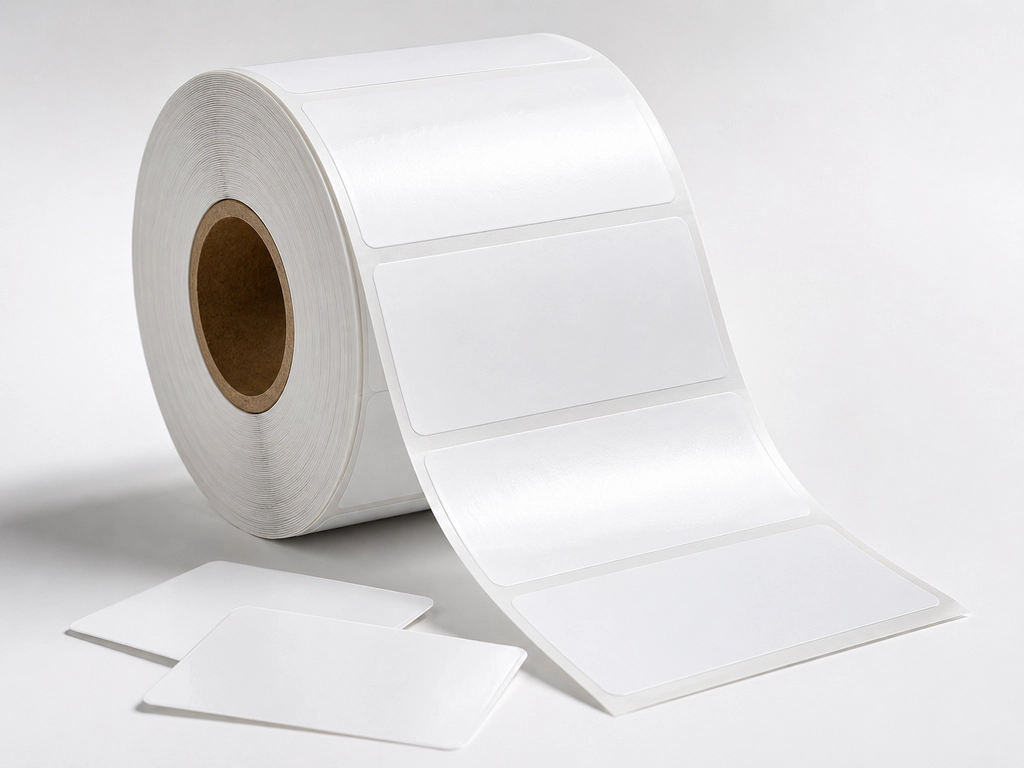
Thermal synthetic label material is a thermal-printable film facestock, typically PET, engineered to accept direct thermal or thermal transfer printing while resisting water, chemicals and tearing. It is used for harsh-environment barcode and asset labels in cold, wet or industrial settings where paper thermal stock fails.
Key specifications
| Facestock | Synthetic (PET) film, thermal-printable |
|---|---|
| Face thickness | Film grades |
| Finish | Matte or gloss film, thermal-receptive |
| Adhesive | Permanent acrylic, removable, freezer, high-tack (water-based or hot-melt) |
| Release liner | White glassine, PET, or CCK/kraft |
| Formats | Jumbo roll, log roll, finished slit rolls |
| Max width | Up to 1,600 mm |
| Core sizes | 25 mm (1 in) / 76 mm (3 in) |
| MOQ | From 1 jumbo roll (stock), 3,000–5,000 m² (custom) |
| Certifications | ISO 9001 / ISO 14001 |
Why choose thermal synthetic
Waterproof and tear-resistant
The film face shrugs off water, condensation and tearing that would ruin thermal paper.
Thermal printing on film
Engineered to accept direct thermal or thermal transfer printing on a synthetic base.
Chemical and abrasion resistant
Withstands solvents, cleaning agents and rubbing in industrial service.
Long life in harsh conditions
Keeps barcodes scannable through cold, wet and dirty working environments.
Typical applications
Chemical & industrial
Plant, container and equipment labels exposed to solvents and abrasion.
Learn more →Cold & wet environments
Freezer, cold-room and wash-down areas where paper thermal fails.
Drum & container labels
Outer packaging identification that must survive storage and transit.
Adhesive & liner options
Thermal synthetic film is laminated to permanent acrylic, high-tack, freezer or removable adhesives on white glassine, PET or CCK/kraft liners; resin ribbons are recommended for thermal transfer grades.
Related materials
Not sure whether the job needs a ribbon? thermal synthetic vs thermal paper choices by print life, exposure, facestock, adhesive and roll format before ordering.
Buying this material for converting? See jumbo roll and slit roll supply options for thermal synthetic label material rolls and match the facestock, adhesive and liner in one specification.
Frequently asked questions
What is thermal synthetic label material?
Thermal synthetic label material is a film facestock, usually PET or PP, engineered to accept direct thermal or thermal transfer printing while resisting water, chemicals and tearing. It brings thermal printing convenience to environments where paper thermal stock swells, delaminates or shreds, keeping barcodes intact through wet, cold and rough handling.
It is chosen for freezer and cold-store labels, chemical drum and pail identification, laboratory cryogenic tubes, plant and outdoor asset tags, and washdown areas in food processing.
Match the thermal coating to your print mode, the adhesive to a cold, damp or low-energy surface, and the caliper to your dispenser and die-cut tooling; resin ribbons give the most durable image on synthetic faces. Chemical and abrasion resistance depend on the exact exposure and dwell time — confirm with sample testing.
What is thermal synthetic label material?
A thermal-printable film (usually PET) that is waterproof and tear-resistant, for harsh-environment identification labels.
Is it direct thermal or thermal transfer?
It is available for both; thermal transfer with a resin ribbon gives the most durable result on film.
Why choose synthetic over thermal paper?
When labels face water, chemicals or rough handling that would destroy a paper thermal stock.
Is it fully waterproof?
Yes, the film facestock is waterproof, unlike paper thermal grades.
Which ribbon should I use for thermal transfer printing on thermal synthetic film?
Use a resin ribbon for thermal transfer printing on thermal synthetic (PET) film — it gives the chemical, moisture and abrasion resistance the film is chosen for. Wax and wax-resin ribbons are not recommended, as they do not bond reliably to a synthetic film surface.
What liner and die-cutting options come with thermal synthetic rolls?
Thermal synthetic film is supplied on white glassine, PET or CCK/kraft liner, matrix-stripped and die-cut to your label shape, on 25 mm (1 in) or 76 mm (3 in) cores up to 1,600 mm wide, slit to your printer's specification.
What is the MOQ for thermal synthetic label material?
Stock thermal synthetic film starts from a single jumbo roll; custom adhesive, coating or width combinations typically start from 3,000–5,000 m². Request a free sample and datasheet so we can confirm your printer and ribbon compatibility before you order.
What is the minimum order quantity (MOQ)?
Stocked grades start from 1 jumbo roll. Custom constructions or coatings typically start from 3,000–5,000 square meters, depending on complexity.
What adhesive and liner options are available?
Permanent, removable, deep-freeze, high-tack or wash-off adhesive (water-based or hot-melt), on white glassine, PET or CCK/kraft liner — matched to your surface and environment.
Request a free sample of Thermal Synthetic Label Material
Send us your facestock, adhesive, liner and end-use details. We ship free A4 sheets or a trial roll with the technical datasheet, and confirm MOQ, lead time and FOB pricing within one working day.
Get thermal synthetic label material, cut to your spec.
Tell us your facestock, adhesive, liner and roll requirements — we quote within one business day. Free samples available.