
Thermal Media · AL-T
Thermal Label Materials
Direct thermal and thermal transfer stock for logistics, retail and cold-chain labelling, from economy eco grades to protected top-coated paper and film.
- Thermal grades
- 5
- Scratch & solvent
- Top-coat
- Sample dispatch
- 48 h
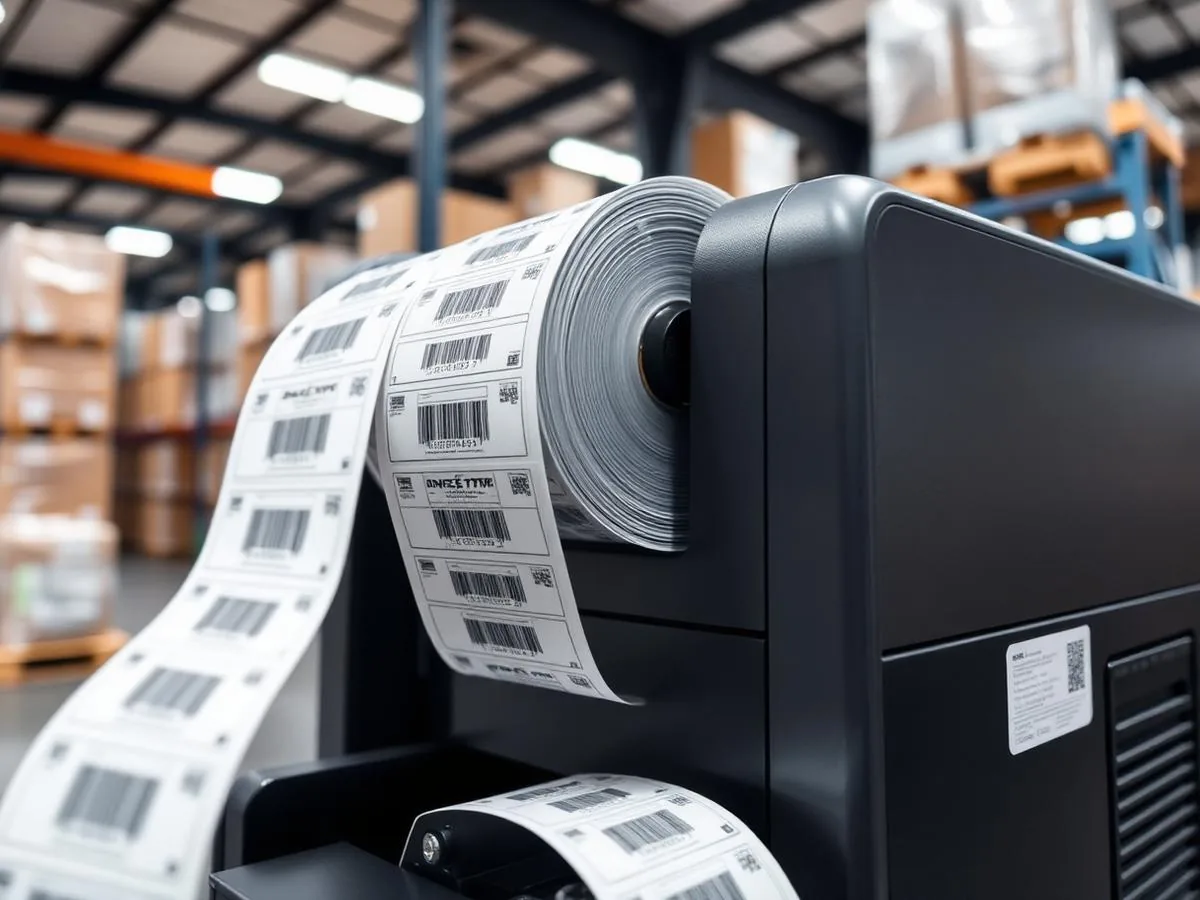
Direct thermal or thermal transfer — which do you need?
Direct thermal labels carry a heat-sensitive coating: the printhead darkens the paper directly, so no ribbon is needed. That makes it the cheapest and simplest way to print shipping, weigh-scale and receipt labels, but the image fades with heat, light, oil and abrasion — plan for a service life of months, not years.
Thermal transfer uses a ribbon that melts onto the label. It costs more per label but produces a durable, scratch- and chemical-resistant image that survives years, and it prints on both paper and film facestocks. Use direct thermal for short-life logistics and retail; thermal transfer for asset tags, laboratory, chemical and archive labelling.
Grade comparison
| Thermal eco | Economy direct thermal · 3 – 6 months image life · shipping, scale |
|---|---|
| Direct thermal top | Top-coated DT · 12 months · retail, pharmacy, tickets |
| Protected thermal | Coated both sides · water, oil, alcohol resistant · cold chain |
| Thermal transfer paper | Semi-gloss or matte · durable with wax/resin ribbon |
| Thermal synthetic | Film-based DT or TT · waterproof, tear-proof, industrial |
| Standard face weight | 60 – 80 gsm paper; 50 – 100 µm film |
| Liner | White glassine 60 / 65 gsm; linerless available |
| Roll format | Jumbo up to 1,070 mm; slit rolls, 1"/3" cores, fanfold |
Values are typical for standard constructions and are not a guaranteed specification. Ask for the datasheet for tolerances and test methods.
Typical applications
- E-commerce and courier shipping labels (incl. 4x6)
- Supermarket weigh-scale and deli labels
- Warehouse, picking and pallet labels
- Pharmacy and patient identification labels
- Cold-chain and frozen food labelling
Frequently asked questions
- How long does a direct thermal label stay legible?
- Typically 3–6 months for eco grades and up to 12 months for top-coated grades, when stored away from heat, sunlight, plasticisers and solvents. Protected thermal extends this in wet or oily conditions.
- Can I print direct thermal without a ribbon?
- Yes — that is the point of direct thermal. The heat-sensitive coating develops the image, so there is no ribbon cost or ribbon changeover.
- Which thermal material works in a freezer?
- Protected thermal or thermal synthetic with a deep-freeze adhesive. Standard eco thermal loses adhesion and its image degrades with condensation.
- What is the MOQ and roll width for thermal label material?
- One jumbo roll (up to 1,070 mm wide) for any stock thermal grade, slit to 1" or 3" cores or supplied fanfold. Linerless and custom adhesive combinations start at 500 kg with a standard production lead time.
- Which adhesive should I choose for thermal shipping labels?
- General-purpose permanent acrylic suits most cartons and poly bags. Choose a hotmelt high-tack adhesive for rough or dusty corrugated surfaces, or a freezer-grade acrylic where the label is applied to or stored on chilled and frozen packaging.
- Can I get a free sample of thermal label material?
- Yes. Tell us the printer type, format (e.g. 4x6") and environment, and we will send free A4 or die-cut samples of the recommended thermal grade with the datasheet, usually within 48 hours.
Still deciding? Ask for a sample roll
Tell us the facestock, adhesive and application. We send free A4 sheets or a test roll with the datasheet, and quote MOQ, lead time and FOB pricing within one working day.
Related materials and guides
Range
Materials in this range
- 01
Direct Thermal
Direct thermal self-adhesive label material for ribbon-free printing: shipping, scale and barcode labels. Eco, top and protected grades. Jumbo rolls.
- 75 – 80 gsm
- Top-coated thermal layer
- 02
Thermal Transfer
Thermal transfer self-adhesive label material for durable, ribbon-printed barcodes and product labels. Paper and synthetic grades, custom rolls.
- 75 – 80 gsm
- Smooth receptive coating
- 03
Thermal Eco
Thermal eco direct thermal label material: cost-effective heat-sensitive paper for short-term shipping and retail labels. Custom widths and cores.
- 65 – 75 gsm
- Economy thermal, no top-coat
- 04
Protected Thermal
Protected (top-coated) direct thermal label material resistant to water, oil, alcohol and abrasion for cold-chain and industrial use.
- 78 – 85 gsm
- Dual top-coat, scratch & solvent barrier
- 05
Thermal Synthetic
Thermal synthetic (film) label material combining thermal printing with waterproof, tear-resistant film for harsh-environment labels.
- 50 – 75 µm
- Thermal-coated PP / PET film
Specification matrix
Thermal label media — specification matrix
Direct thermal and thermal transfer grades compared on top-coat, image life, printer compatibility and environment.
Direct Thermal
- Substance
- Top-coat / surface
- Recommended adhesive
- Service temperature
- Printer / ribbon
- Typical applications
Thermal Transfer
- Substance
- Top-coat / surface
- Recommended adhesive
- Service temperature
- Printer / ribbon
- Typical applications
Thermal Eco
- Substance
- Top-coat / surface
- Recommended adhesive
- Service temperature
- Printer / ribbon
- Typical applications
Protected Thermal
- Substance
- Top-coat / surface
- Recommended adhesive
- Service temperature
- Printer / ribbon
- Typical applications
Thermal Synthetic
- Substance
- Top-coat / surface
- Recommended adhesive
- Service temperature
- Printer / ribbon
- Typical applications
All materials in this range are available as self-adhesive label stock in jumbo rolls or slit rolls. If you are still choosing a print method, see direct thermal vs thermal transfer labels.
Request a quote or a free sample
Send us your facestock, adhesive, liner and roll specification. Low MOQ, OEM/ODM, export to 60+ countries.