
Adhesives & Liners · AL-A
Label Adhesives & Release Liners
Eleven adhesive systems and six release liners, compared side by side — tack, peel, temperature window and the surfaces each one is built for.
- Adhesive systems
- 12+
- Standard glassine
- 60 gsm
- PET liner option
- 23 µm
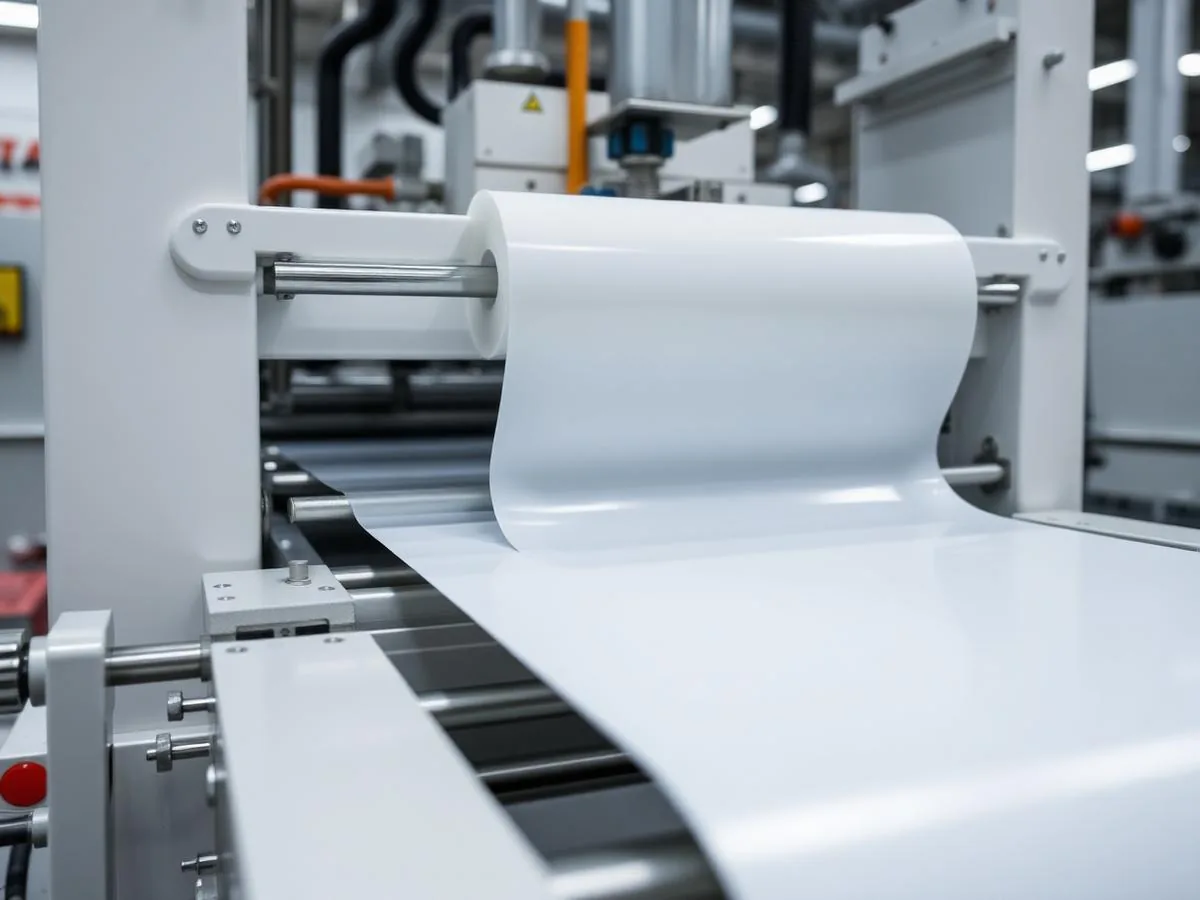
How to choose a label adhesive and release liner
A self-adhesive label is three layers, and two of them decide whether it stays on: the adhesive and the liner. The adhesive is specified by four numbers — loop tack (initial grab), 180° peel after 24 hours (ultimate bond), minimum application temperature and service temperature range — plus the surface energy of what you are labelling. Rigid PET, glass and coated board are easy; recycled kraft, PP tubs and powder-coated metal are not.
The liner is a converting decision rather than an end-use one. Glassine is the low-cost default for paper and thermal labels, PET liners hold tighter die-cut tolerances and survive humidity for high-speed applicators and no-label-look film, and clay-coated kraft (CCK) gives the stiffness needed for sheet-fed work and aggressive adhesives. Down-gauged or linerless constructions raise the label count per roll and cut liner waste.
Use the matrix below to shortlist up to three adhesives, pick a liner, then send the combination straight to a quote — we validate the bond on your own container before you commit to a production run.
Frequently asked questions
- What is the difference between permanent and removable label adhesive?
- Permanent adhesives build a bond of roughly 10–18 N/25 mm after 24 hours and cannot be removed without damaging the label or the surface. Removable acrylics stay at 2–4 N/25 mm so the label peels cleanly for up to about 12 months on smooth surfaces. Anything between the two is 'peelable' and must be tested on the actual substrate.
- Which adhesive works on recycled or textured cartons?
- A rubber-based hot-melt high-tack adhesive (AL-A20). Its higher coat weight and instant grab wet out the rough, low-energy surface of recycled kraft and corrugated board, where a general-purpose acrylic will lift at the edges.
- Can labels be applied to frozen products?
- Yes, with a deep-freeze adhesive (AL-A50) that applies down to −40 °C. Tell us the application temperature and the storage temperature separately — a label applied at ambient and stored frozen needs a different grade from one applied directly onto frozen packaging.
- When should I use a PET liner instead of glassine?
- Choose PET (23–30 µm) for very small or complex die shapes, high-speed automatic applicators, humid plants, and clear no-label-look labels. It is dimensionally stable, does not tear or shed fibre, and lets more labels fit on the same roll diameter.
- Do wash-off adhesives really release in recycling?
- Alkaline wash-off adhesive (AL-A60) releases in 1–2% caustic soda at 80 °C within 10–15 minutes, leaving the flake clean. Because wash cycles differ, we ship samples for your recycler to validate before approval.
- What is the minimum order and roll width for adhesive/liner combinations?
- One jumbo roll (up to 1,070 mm wide) for any published adhesive-liner combination on our standard facestocks. Custom adhesive coatings or non-standard liners start at 500 kg and typically add one to two weeks to the standard lead time.
- Which adhesive and print method combination should I specify for film labels?
- Match the adhesive to the surface first, then confirm the print method separately — non-absorbent film facestocks need UV flexo, UV offset or a topcoated digital process regardless of which adhesive you choose, since adhesive selection does not change ink anchorage.
- Can I request datasheets for the adhesives before I order?
- Yes, full technical datasheets covering loop tack, 180° peel, temperature range and liner caliper are available for every adhesive and liner in the matrix. Ask for the datasheet and a free sample set so you can validate the bond on your own substrate first.
Still deciding? Ask for a sample roll
Tell us the facestock, adhesive and application. We send free A4 sheets or a test roll with the datasheet, and quote MOQ, lead time and FOB pricing within one working day.
Related materials and guides
Adhesive comparison matrix
Typical laboratory values on stainless steel after 24 hours at 23 °C / 50% RH. Filter by family, then tick up to 3 adhesives to see them side by side and carry the selection straight into a quote.
| Adhesive | Tack | Peel | Min. app. | Service temp. | Bonds well to | |
|---|---|---|---|---|---|---|
| General purpose permanent acrylicAL-A10 · Water-based acrylic (emulsion) | 8 – 11 | 10 – 13 | +5 °C | −20 → +80 °C | Paper, board, glass, PE/PET bottles, most rigid plastics | |
| Hot-melt permanent (HM) high tackAL-A20 · Rubber-based hot-melt (SIS) | 16 – 20 | 14 – 18 | +2 °C | −10 → +60 °C | Corrugated board, recycled kraft, textured and low-energy plastics (PP, PE) | |
| Permanent solvent acrylicAL-A30 · Solvent-based acrylic | 9 – 12 | 13 – 17 | +10 °C | −30 → +120 °C | Metal, drums, powder-coated parts, PET/PP film, oily surfaces | |
| Ultra-clear permanent acrylicAL-A35 · Water-based acrylic, high clarity | 7 – 10 | 10 – 14 | +5 °C | −20 → +80 °C | Clear PET / glass bottles, cosmetics packaging | |
| Removable acrylicAL-A40 · Water-based acrylic, low-tack | 2 – 4 | 2.5 – 4 | +5 °C | −10 → +60 °C | Glass, smooth plastics, painted metal, whiteboards, appliances | |
| Ultra-removable / repositionableAL-A45 · Micro-sphere acrylic | 1 – 2 | 0.8 – 1.6 | +10 °C | 0 → +50 °C | Paper, book covers, electronics screens, glass | |
| Deep-freeze / cold-chainAL-A50 · Modified acrylic, low-Tg | 10 – 14 | 9 – 13 | −40 °C (direct to frozen goods) | −40 → +60 °C | Frozen packaging, wet or iced cartons, LDPE bags | |
| Wash-off (alkaline releasable)AL-A60 · Alkali-soluble acrylic | 6 – 9 | 8 – 12 | +5 °C | −10 → +70 °C | PET bottles, returnable glass, HDPE containers | |
| High-tack rubber (tyre / industrial)AL-A70 · Rubber hot-melt, high coat weight | 18 – 24 | 16 – 22 | 0 °C | −20 → +80 °C | Vulcanised rubber, tyres, rough castings, timber, concrete sacks | |
| Direct food contact acrylicAL-A80 · Water-based acrylic, FDA 175.105 / EU 10/2011 | 7 – 10 | 9 – 12 | +5 °C | −20 → +80 °C | Fruit, cheese rind, bakery film, deli trays | |
| Tamper-evident / destructible bondAL-A90 · High-shear acrylic for eggshell & VOID faces | 12 – 16 | Face fails before bond | +10 °C | −20 → +80 °C | Electronics housings, cartons, warranty seals, glass |
Side-by-side comparison
Tick up to 3 adhesives in the matrix above to compare them here.
Release liner comparison
The liner controls die-cutting accuracy, dispensing speed and how many labels fit on a roll. Pick the one you want quoted with your adhesive.
| Liner | Weight | Caliper | Release | Die-cutting | Best for | |
|---|---|---|---|---|---|---|
| White glassineAL-L10 · Super-calendered glassine, silicone-coated | 60 – 65 gsm | 52 – 58 µm | Medium (15 – 25 cN/50 mm) | Good — general converting | Standard paper and thermal labels, high-speed dispensing | |
| Yellow / blue glassineAL-L15 · Tinted glassine, silicone-coated | 60 – 65 gsm | 52 – 58 µm | Medium | Good — easy waste-matrix inspection | Long flexo runs where matrix stripping needs visual contrast | |
| Thin glassine (down-gauged)AL-L20 · Glassine, silicone-coated | 50 – 55 gsm | 42 – 48 µm | Medium | Requires accurate die pressure | More labels per roll, fewer roll changes, lower liner waste | |
| PET linerAL-L30 · Clear or white polyester, silicone-coated | 23 / 30 / 36 µm | 23 – 36 µm | Light to medium, very stable | Excellent — tight tolerances, no fibre tear | Clear no-label-look, small/complex die shapes, humid environments, high-speed applicators | |
| CCK (clay-coated kraft)AL-L40 · Clay-coated kraft, silicone-coated | 80 – 140 gsm | 75 – 130 µm | Medium to heavy | Excellent — stiff, resists tearing | Sheet-fed printing, laminating, thick or aggressive adhesives, industrial die-cutting | |
| Linerless (no liner)AL-L50 · Silicone topcoat on the facestock | — | — | Self-wound | Continuous cut, no matrix | Up to 40% more labels per roll and zero liner waste on compatible printers |
Quote this construction
Select an adhesive above (currently quoting White glassine only) or send us the application and we will specify it for you.
Compare adhesive families
Selection depends on container, adhesive, liner, printing method and service environment.
Permanent acrylic
Best for: Standard product labels on glass, PET, coated board and most rigid packaging
Watch-outs: Edge lift on low-energy plastics, textured board and cold or wet surfaces
Semi-gloss paper →Removable
Best for: Promotional labels, price marking and labels peeled by hand within their service life
Watch-outs: Bond can build over time; removability differs by surface and storage
White BOPP →High-tack hot-melt
Best for: Recycled kraft, corrugated board, textured plastics and low-energy surfaces
Watch-outs: Higher coat weight; can bleed at edges and shorten die life
Kraft label paper →Freezer / deep-freeze
Best for: Labels applied at low temperature or stored in chilled and frozen conditions
Watch-outs: Application temperature and storage temperature must be specified separately
Freezer & cold-chain →Wash-off
Best for: Bottle-washing and recycling lines where the label must separate
Watch-outs: Release depends on wash chemistry, temperature and dwell time; testing required
Wash-off adhesive →
Choosing between long-term stability and strong initial grab? Read the acrylic vs hotmelt label adhesive comparison before shortlisting a grade for sample testing. For polyolefin packaging, see label materials for HDPE and PP containers.
Release liner selection
The liner is a converting decision: it controls die-cutting tolerance, matrix stripping, dispensing speed and labels per roll.
| Liner | Best for | Watch-outs |
|---|---|---|
| White glassine | Low-cost default for paper and thermal labels at moderate line speeds | Fibre tear and dimensional movement in humid plants |
| PET | Small or complex die shapes, high-speed applicators, humid conditions, no-label-look film | Higher cost per square metre |
| CCK / kraft | Sheet-fed work, aggressive adhesives and applications needing liner stiffness | Heavier caliper reduces labels per roll |
| Down-gauged / linerless | More labels per roll and less liner waste | Requires compatible dispensing equipment; confirm with your applicator supplier |
When a standard adhesive or liner may not be the best fit
Label adhesives and release liners define how a pressure-sensitive label applies, holds, dispenses and releases during converting or labelling. Choose the adhesive by surface, temperature, moisture, removability and service life, then match the liner to die-cutting, dispensing speed and roll format.
A general-purpose permanent acrylic is not the right answer for every job. Low-energy plastics, recycled and textured board, frozen packaging, curved or small-diameter containers and bottle-washing lines each need a different adhesive family. Very small die shapes, humid plants and high-speed applicators usually need a PET liner rather than glassine.
Published values describe the coating, not your line. Validate the shortlisted combination on your own container, at your own application temperature and line speed, before a production order.
Before requesting a quote
Have these details ready so we can propose a construction instead of a generic price.
- Surface being labelled: glass, PET, HDPE, PP, metal, corrugated or recycled board
- Surface condition: smooth, textured, dusty, oily, wet or curved
- Application temperature and service temperature range
- Required bond behaviour: permanent, removable, high-tack, freezer or wash-off
- Label size, roll width, core size and winding direction
- Die-cutting complexity, matrix stripping and applicator dispensing speed
- Printing method and facestock already selected
- Expected label life and end-of-life route (recycling, refill, disposal)
- Annual volume, first-order volume and sample requirement
Request samples, MOQ and lead time
To check availability, sample options and lead time, send us your application, label size, roll width, facestock, adhesive, liner, printing method and estimated order volume. Our team will recommend a suitable construction and confirm whether a sample roll or trial order is available.
Selection depends on container, adhesive, liner, printing method and service environment. We confirm every construction against your own substrate and line conditions before bulk production.
Adhesive and liner options are coated into jumbo roll label material and slit to your working width and core size.
Request a quote or a free sample
Send us your facestock, adhesive, liner and roll specification. Low MOQ, OEM/ODM, export to 60+ countries.