
Chemical & Industrial
Chemical & industrial label materials
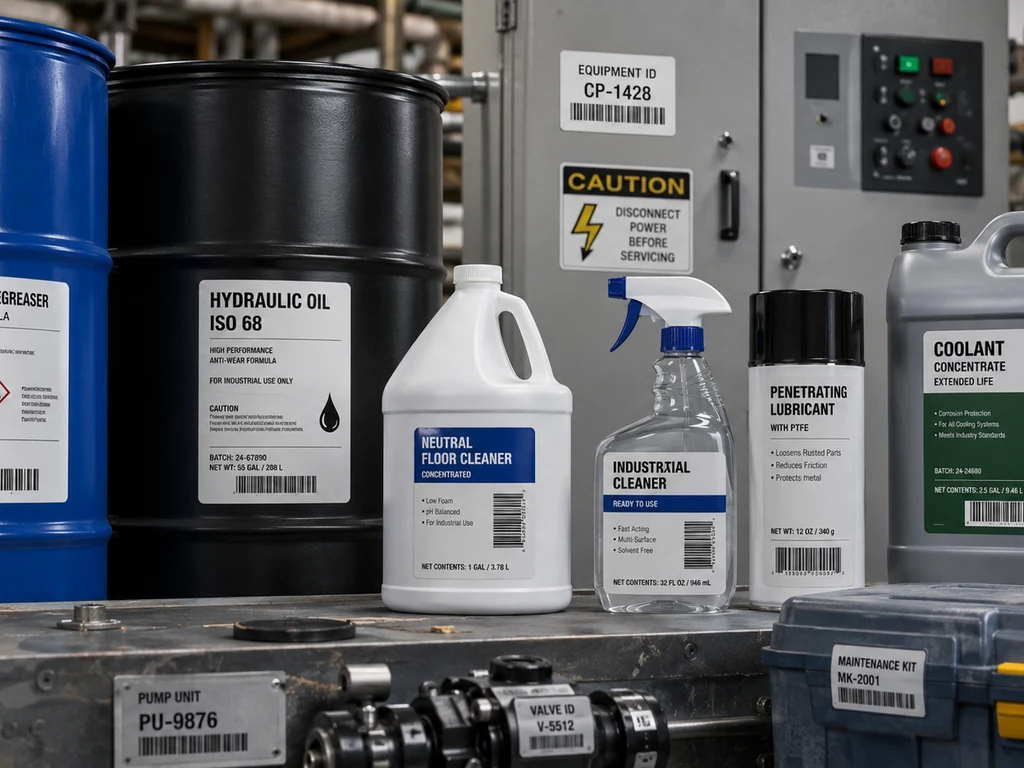
Drum and canister labels face solvent splash, outdoor UV and low-energy plastic surfaces. We supply PET, vinyl and durable PP facestocks on high-performance acrylics, specified for GHS drum marking and multi-year outdoor exposure without fading, curling or edge lift.
- 2yr
- Outdoor exposure target
- −40°C
- Service minimum
- 150°C
- Service maximum, PET
- 48h
- Sample dispatch
What the application demands
The failure modes we design against
- 01
GHS and BS 5609 drum marking
Marine drum labels must survive salt-water immersion and abrasion. Polyester and vinyl constructions are specified against BS 5609 Section 2 requirements; print durability is qualified with your ribbon or ink.
- 02
Low-surface-energy containers
HDPE and PP jerrycans resist wetting. High-tack acrylics with an aggressive initial grab hold on untreated, textured and slightly oily drum walls.
- 03
Solvent and chemical splash
Topcoated PET keeps print legible after contact with acids, alkalis, fuels and cleaning solvents, where paper delaminates and coated stock greys out.
- 04
Outdoor UV and temperature cycling
UV-stable films and adhesives that hold from −40 °C to 150 °C keep labels flat on drums stored in a yard through summer and winter.
Recommended constructions
Facestock, adhesive and liner by application
| Application | Facestock | Adhesive | Liner | Spec sheet |
|---|---|---|---|---|
| Steel drum, outdoor yard storage | White PET 50 µm | High-performance permanent acrylic | PET 36 µm | View → |
| HDPE / PP jerrycans and canisters | White PP film 60 µm | High-tack acrylic for LSE surfaces | PET 23 µm | View → |
| Conformable, curved and textured surfaces | PVC / vinyl 80 µm | Permanent acrylic | Glassine 70 g | View → |
| High-temperature components | Polyester 50 µm, high-temp topcoat | High-temperature acrylic | PET 36 µm | View → |
| Asset control and warranty seals | Destructible eggshell vinyl | Ultra-permanent acrylic | Glassine 70 g | View → |
Durability testing available on request
- Salt-water immersion and abrasion per BS 5609 Section 2 profile
- Accelerated UV exposure with adhesion and colour check
- Chemical splash panel against your named solvents
- Low-surface-energy peel adhesion on your actual container
Materials used in this sector
Adhesive & liner guide →Converters and distributors can source the recommended constructions as jumbo roll label material for slitting, printing and rewinding.
Frequently asked questions
Which material do I use for GHS drum labels?
A white polyester facestock on a high-performance permanent acrylic. Polyester carries the salt-water immersion and abrasion resistance a BS 5609 Section 2 profile requires; Section 3 durability also depends on your print system.
How do I get adhesion on HDPE and PP containers?
Use a high-tack acrylic developed for low-surface-energy plastics and allow 24 hours of dwell for the bond to build. On heavily textured or release-treated drums, send us the container for a peel test.
How long will a label last outdoors?
Two years of outdoor exposure is our design target for UV-stable film constructions. Actual life depends on latitude, orientation and the ink or ribbon used.
What temperature range do these constructions cover?
Polyester constructions serve from −40 °C to 150 °C continuous, with short excursions higher. Vinyl and PP are more conformable but limited to roughly 80 °C.
Other application programmes
Specify a durable industrial construction
Send the container material, the chemicals involved and the exposure. We will nominate a facestock and adhesive and ship samples for your own field test.