
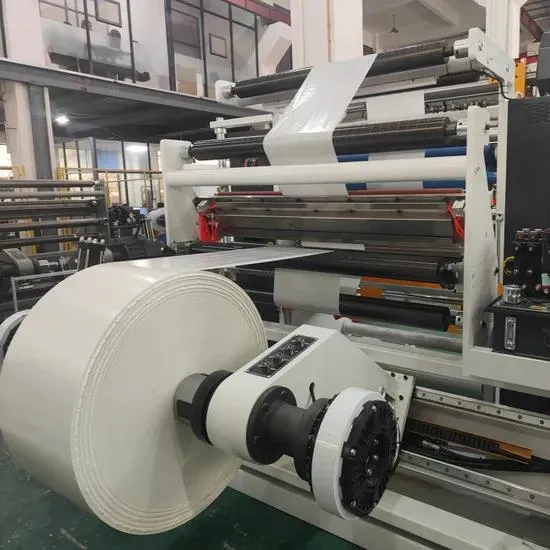
Start with the document you need to approve
“Please quote white film with permanent adhesive” leaves several decisions open. The film surface may not suit the intended ink. A roll with the requested width may exceed the unwind’s diameter or weight limit. A supplier’s alternative liner may change converting behavior even if the price is unchanged.
Those are specification questions, not reasons to fill every unknown with a catalogue default. For an initial enquiry, state what is known and mark the rest for discussion. For production approval, identify which requirements have been confirmed, which alternatives were accepted and which points remain unresolved.
Use four columns in the working sheet:
| Buyer requirement | Supplier response | Difference or open question | Approval reference |
|---|---|---|---|
| What the job or equipment requires | The proposed construction, format or commercial condition | Anything changed, excluded or not yet confirmed | The document, drawing, sample or decision that closes the item |
This is a document-control framework, not measured performance data. A supplier response should not silently overwrite the buyer requirement.
- 01Buyer requirement
- 02Supplier response
- 03Exception review
- 04Approved revision
For available material directions and the existing requirements assistant, start with AllinLabel’s label stock jumbo roll page. Use this guide to review the reply and prepare the approval record, rather than entering the same enquiry twice.
The label stock jumbo roll specification checklist
Keep the checklist with the RFQ reference and revision. Some entries are limits, some are desired outcomes and some are requests for information. Make that distinction explicit.
| Item | State in the enquiry | Confirm before production approval |
|---|---|---|
| Project and revision | Contact, project, RFQ reference and intended job | The quotation and production specification refer to the same revision |
| Complete construction | Known material reference or facestock, adhesive and liner requirements | Proposed construction identity; substitutions listed explicitly |
| Facestock and surface | Material, color, finish and required coating or treatment | The selected surface and its printing requirements |
| Thickness or grammage | The component or complete laminate being specified, with units | Which layer the value describes, plus agreed variation and measurement basis |
| Adhesive behavior | Actual substrate, hold or removal objective, and relevant exposure | Suitable candidate grade and the evidence or trial needed |
| Application and service conditions | Conditions when labeling and conditions afterwards | Both are addressed; a storage range has not replaced an application requirement |
| Liner | Known type or requirements for die-cutting, stripping and dispensing | Proposed liner and any effect of an alternative on the process |
| Printing and converting | Equipment, ink or ribbon, process route and job constraints | Required surface preparation and the scope of compatibility evidence |
| Supplied width | Web width and required tolerance; usable width if different | Billed width, supplied width and any edge allowance are understood |
| Length | Target length per roll and quantity unit | Agreed length variation and its relationship to machine limits |
| Roll outside diameter | The unwind’s maximum permitted roll OD | The proposed roll build stays within the agreed limit |
| Roll mass | The permitted net mass for the line and handling system | Roll net mass is distinguished from pallet gross mass |
| Core | Inside diameter, fit requirements, wall or outside diameter, length and projection where relevant | Compatibility with the shaft or chuck and roll loading arrangement |
| Winding | Printable side in or out; reference view and unwind direction | A drawing or agreed description, not an unexplained direction number |
| Splices | Allowed type, count, location restrictions and marking needs | Supplier exceptions and the way each splice will be identified |
| Packing and identification | Roll protection, pallet or receiving limits, roll and batch identification | Packing arrangement, identification and documents to accompany the delivery |
| Trial and order quantity | Trial purpose, requested format and production quantity with units | Trial availability, MOQ basis and commercial conditions |
| Delivery and acceptance | Destination, requested timing, required documents and acceptance basis | Confirmed scope, schedule, open exceptions and authorized approval |
This table lists buyer questions. It does not state AllinLabel stock sizes, tolerances, test capabilities or a standard sample policy. For linerless material, use the applicable construction and equipment requirements rather than inventing a separate liner.
Identify the construction, not just the facestock
“Clear BOPP,” “white PE” or “semi-gloss paper” identifies a direction, not a complete purchase specification. Add the surface or coating needed for printing, the adhesive requirement and the release liner. Where a known material code is being matched, include its document revision and a representative sample reference if available.
State the actual package surface and intended removal outcome. Include moisture, condensation, cleaning, shape or other conditions that matter to the job. Do not ask a supplier to infer them from a broad industry label such as “beverage” or “logistics.”
Use the adhesive and release liner guide for component selection. If the supplier proposes a different adhesive or liner, treat it as an alternative for review, not the same material under a different name.
Treat width, length, OD and mass as separate requirements
A target length does not establish a machine-compatible roll. The same length can produce a different roll build when the complete construction, core or winding changes. State the machine’s OD and net-mass limits separately and identify which limits must not be exceeded.
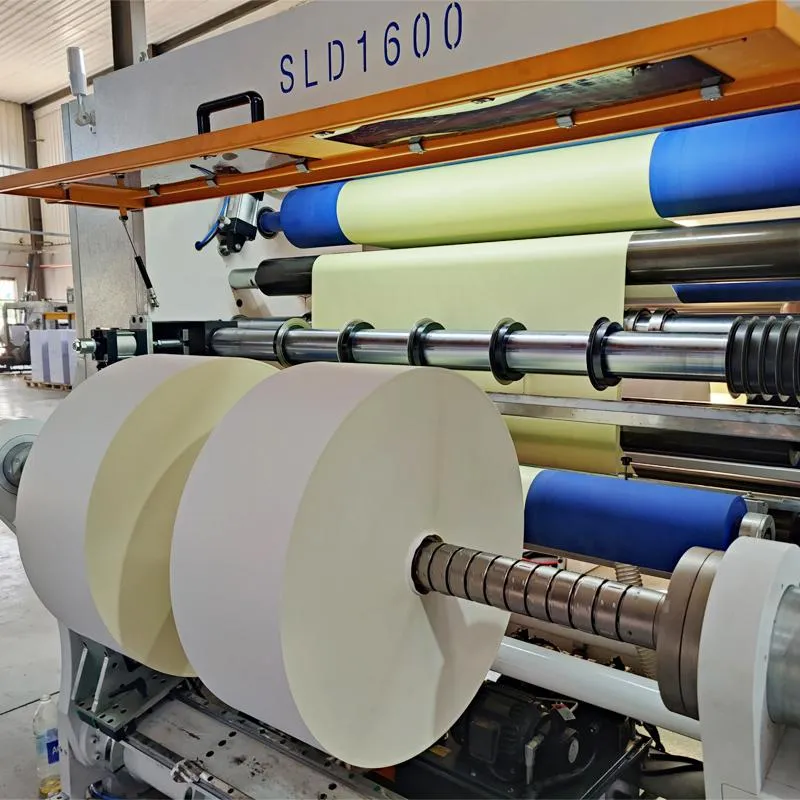
Mactac’s roll-dimension calculator treats core outside diameter, material thickness and roll length or diameter as separate inputs. It is a planning reference, not approval of a supplier’s roll build or a substitute for the equipment limits.
The SPMC guide to rollstock specifications discusses dimensions, cores, splices and winding in flexible barrier rollstock. These are useful specification questions, but the document is not a labelstock standard or an AllinLabel supply specification.
Check what “width” means in the response. Supplied web width, usable converting width and a finished label dimension are not interchangeable. The core also has more than one dimension: ID concerns the opening, while core length and permitted projection can affect loading and positioning.
There is no need to copy another supplier’s nominal dimensions into your order. Send the actual machine and handling constraints and ask for the proposed roll build to be confirmed against them.
Do not approve winding from a number alone
For unprinted material, start with which side of the construction faces outward and how the web unwinds from the defined viewing position. Include any directional surface or process requirement.
A numbered diagram for printed labels may describe which artwork edge feeds first. That can be useful for finished-label dispensing, but it is not automatically a specification for unprinted jumbo stock. If either party uses a numbered winding scheme, attach the drawing and confirm that both parties are reading the same view.
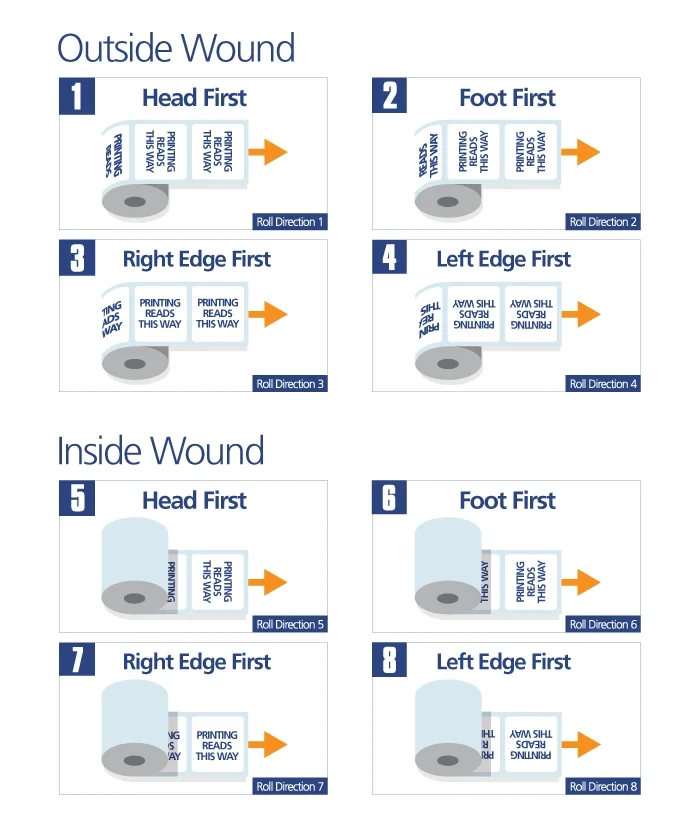
Keep the approved drawing with the RFQ and order revision. Do not leave “standard winding” as the final instruction when different teams may interpret it differently.
Put splice and packing exceptions in writing
Splice requirements should describe what the process can accept: construction or tape restrictions where applicable, permitted count, placement restrictions, marking and detection. “No splices” is a buyer requirement that the supplier must accept or qualify, not an assumed standard.
Jujo Thermal’s published roll specifications show one supplier defining its own core, splice and marking arrangements. The useful lesson is to obtain explicit confirmation; its dimensions and splice allowances should not be copied as industry-wide or AllinLabel rules.
For packing, describe the receiving constraints as well as protection needs. Specify whether the relevant limit concerns an individual roll or the whole pallet. Ask how roll IDs and batch references will be preserved through shipment and receipt. Do not assume that a particular wrapping method, pallet arrangement or inspection document is included without confirmation.
Read a supplier reply as a list of decisions
A reply can be complete enough to price yet incomplete for production approval. Review the exceptions before focusing on the total.
The following examples are hypothetical document-review situations, not actual AllinLabel quotations or test results:
| Buyer request | Supplier reply | Decision still needed |
|---|---|---|
| Target length of 1,000 m per roll, subject to the stated machine limits | Length offered, but OD and net mass not addressed | Confirm the roll build against both limits; length alone does not close the item |
| A named liner or equivalent proposed for evaluation | A different liner listed without a construction reference | Identify the alternative and determine whether a converting trial is needed |
| Winding defined by an attached drawing | “Standard winding” | Confirm the drawing or document the proposed difference |
| No splices requested | Splices permitted, without a count or marking description | Obtain an agreed exception or a revised offer before approval |
The 1,000 m figure is an illustrative request, not a standard roll length or confirmed availability. None of these examples supports a savings percentage, pass rate or machine-performance claim.
Compare the quotation unit only after the offered constructions and scope are understood. For the arithmetic, use the separate MSF, square-meter and linear-meter quote guide. A unit conversion cannot resolve an unapproved material substitution.
Close the trial, documentation and change-control questions
State what the trial is meant to establish: appearance, print compatibility, die-cutting and stripping, dispensing, or application performance. These are different tasks. A small appearance sample is not evidence that a full-width production roll will meet every requirement.
Ask for the current material datasheet for the proposed construction. Typical TDS values are not automatically incoming acceptance limits. Where test results are required, agree the method and revision, specimen, conditions, units and acceptance basis. A COA or other shipment document should only be requested or promised within an agreed documentation scope.
Before order release, keep these references connected:
- Approved construction and document revision.
- Accepted supplier exceptions and unresolved points.
- Trial or sample identity and the scope of its approval.
- Roll drawing, packing and identification requirements.
- Confirmed quotation and production-order references.
Do not mark an unresolved item approved simply to finish the sheet. If a construction, liner, roll build or process requirement changes later, record the change and its approval rather than silently replacing the earlier version.
For checking material after delivery, use the separate labelstock incoming inspection guide. This procurement checklist prepares the purchase record; receiving inspection checks the delivery against the agreed basis.
Download the blank RFQ review sheet
Use the accompanying CSV to record the buyer requirement, supplier response, exception and approval reference for each checklist item. It contains blank working fields, not an approved specification, supplier quotation or test report.
Unknown values can remain open at enquiry stage. Identify who needs to resolve them, and which items must be closed before production approval. The sheet does not create a supply commitment or replace the purchase agreement.
Buyer FAQs
What must I provide for an initial jumbo-roll enquiry?
Start with the application, known material reference or construction direction, printing process, quantity, destination and roll or machine requirements you know. Identify unknowns explicitly. A preliminary discussion does not require invented adhesive codes or guessed dimensions.
Does one “standard core” size fit every jumbo roll?
No single description establishes fit. Confirm core ID, relevant tolerances, core construction and length against the actual shaft or chuck and loading arrangement. A catalogue reference is not a substitute for the equipment requirement.
Should length or maximum OD control the order?
State the desired length and the non-negotiable machine limits separately. Ask the supplier to identify conflicts and confirm the feasible roll build. Do not assume an offered length proves that the OD and net-mass limits are satisfied.
Is a supplier’s TDS enough to approve an order?
It provides technical information, but does not by itself close roll format, packing, commercial terms, accepted exceptions or application qualification. Check that the document matches the proposed construction and understand whether its values are typical or agreed limits.
Can this checklist confirm sample availability, MOQ or lead time?
No. It helps prepare the request. Sample arrangements, MOQ, supply format, documentation and timing require confirmation for the specific construction and enquiry.
Send a reviewable enquiry
Send the construction and process information you have, the machine limits and the intended trial or production quantity. Ask for proposed alternatives and exceptions to be shown separately. Keep the reply linked to your RFQ revision before confirming the order.
Request a jumbo-roll quotation or trial discussion, or use the existing jumbo roll requirements assistant to organize the first enquiry.
Sources and limits
- SPMC: A Guide to Writing Rollstock Specifications. Flexible barrier-rollstock context; useful for roll-format questions, not labelstock-specific supply approval.
- Jujo Thermal: Roll specifications. Supplier-specific examples of documented roll requirements; none of its numeric limits is adopted here.
- Mactac: Conversion Calculators. Roll-geometry inputs and conversions; no calculator output is presented as a guaranteed delivery dimension.
The review framework, blank worksheet and hypothetical reply examples are editorial tools. No AllinLabel test results, fixed stock dimensions, certification claims or commercial guarantees are presented.