
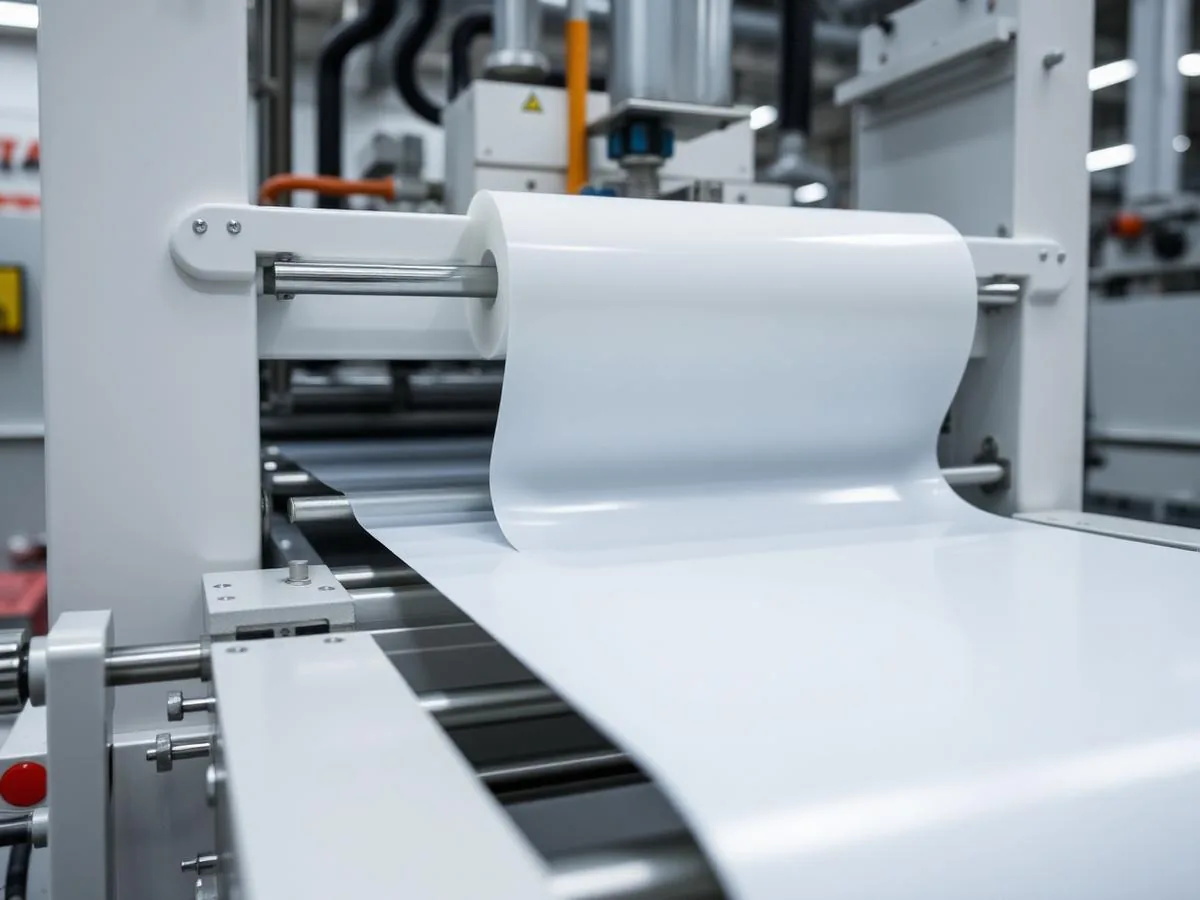
Start by recording the exact failure
Before adjusting the applicator, keep failed samples and note the speed, roll position (outer wraps or near the core), lane and label repeat. The pattern points to the cause far faster than changing several settings at once.
| Symptom | Areas to inspect | Useful confirmation |
|---|---|---|
| Label stays on the liner past the peel plate | Tight or uneven release, label too flexible, blunt peel plate, low liner tension | Peel a label by hand at the same angle and compare the force with a good roll |
| Label flies or lands off-position | Release too easy, static, high speed, label curl, sensor timing | Check whether the fault rises with speed or appears after splicing |
| Liner breaks at the peel plate | Deep die strike, liner too light for the line, high tension, sharp or damaged edge | Inspect the liner under transmitted light below the cut lines |
| Liner breaks only near the core | Roll-set, wind tension, adhesive flow from warm storage | Compare outer-wrap and core-end samples from the same roll |
| Labels missing or doubled | Gap sensor setup, liner opacity, matrix residue, label gap | Re-teach the sensor and check the gap for adhesive or facestock remains |
Why do labels fail to dispense at the peel plate?
1. Release is too tight or uneven
If the force needed to separate label and liner is higher than the stiffness of the label can overcome at the peel edge, the label follows the liner round the plate. Uneven silicone coverage, aged stock or an adhesive that has flowed into the release surface can all raise or vary this force.
2. The label is too flexible for the dispensing angle
Thin or very conformable facestocks such as soft PE film need more help to break away than stiff paper or PET. A sharper peel plate, correct liner tension and an adequate leading-edge length usually matter more than changing adhesive.
3. Peel-plate and web-path setup
A worn or rounded peel edge, the wrong wrap angle or low rewind tension lets the liner lift away gradually instead of turning sharply, so the label never gets a clean break point.
Why does the release liner break?
1. The die strike has weakened the liner
Excess die pressure scores the liner along every cut line. It may survive converting and then snap on the applicator where it is pulled hardest around the peel edge. See our guide to why the label matrix breaks during stripping for how die strike is checked.
2. The liner type does not suit the line
Glassine paper liners are widely used and die-cut well, but they are weaker in tear than film liners. Very high-speed or clear-on-clear applications often move to PET liners for strength, flatness and a smoother peel. Confirm liner choice with your applicator supplier and the material datasheet rather than a general rule.
3. Tension, splices and roll condition
Sudden tension spikes at start-up, poor splices, damaged roll edges and rolls stored in heat or humidity all reduce the margin before a liner tears.
Step-by-step troubleshooting checklist
- Keep failed samples and record speed, roll position and lane.
- Hand-peel labels from a good and a bad roll at the same angle and compare.
- Inspect the liner under transmitted light for score marks below the cut.
- Check the peel plate edge for wear, and confirm wrap angle and liner tension.
- Re-teach the gap sensor and check label gaps for residue.
- Condition rolls at the line temperature before running and compare fresh stock.
- Change one variable at a time and run a documented short trial.
What to send your label stock supplier
A useful investigation needs the facestock, adhesive and liner on the roll label or datasheet, the applicator model and speed, the label size and gap, roll storage conditions, photos of failed labels and liner, and an unused roll from the same batch. Always confirm final settings with the current TDS and a trial on your own line.
Contact our technical teamFrequently asked questions
- Is a PET liner always better than glassine for high-speed labelling?
- Not always. PET liners are stronger and flatter, but cost more and die-cut differently. Glassine runs well on many lines when the die strike and tension are controlled.
- Should I slow the applicator down when labels fly?
- It can hide the symptom, but check release, static and label curl first so the line can run at its intended speed.
- Can one roll dispense well and another fail from the same order?
- Yes. Roll position, storage temperature and converting variation can differ between rolls, which is why comparing a good and a bad roll is the fastest test.
Labels not dispensing on your line?
Send us the construction, applicator details and failed samples and our engineers will help trace the cause.
If you are buying material before converting, start from request jumbo roll samples and then narrow the facestock, adhesive and liner with our technical team.
Related materials
Related reading
More guides on troubleshooting and related topics
 TroubleshootingWhy Does the Label Matrix Break During Stripping?Diagnose repeating matrix breaks, labels lifting with the waste and liner damage by tracing the failure pattern before changing press settings or materials.10 min read
 TroubleshootingWhy Labels Bubble, Wrinkle and Tunnel on Bottles and ContainersBubbles, wrinkles and tunnels look alike but have different causes: trapped air at application, gas from the container, a label that cannot follow the shape, or stress built into the roll.9 min read
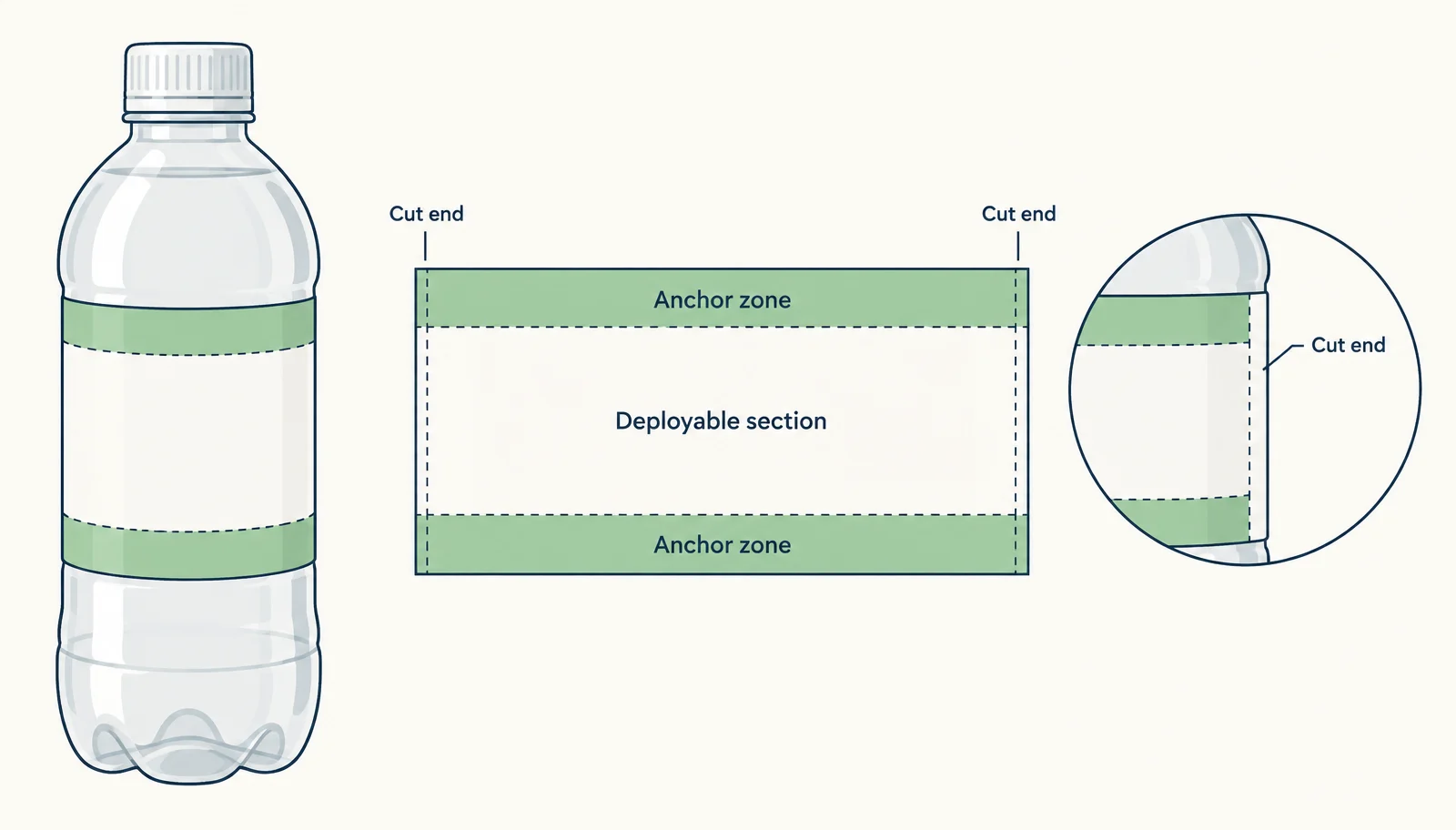 TroubleshootingWhy High-Elongation PE Film Can Still Tear in Bottle-Strap LabelsHigh elongation does not qualify a bottle-strap label. Learn how to separate cut-edge tears, permanent stretch and anchor movement before changing PE film.9 min read
Request a quote or a free sample
Send us your facestock, adhesive, liner and roll specification. Low MOQ, OEM/ODM, export to 60+ countries.