
Application guide
Label Materials for PET Bottles
Choose between clear BOPP, white BOPP, metallized BOPP, PET film and wash-off adhesive constructions for PET bottle packaging in beverage, personal care and household lines.
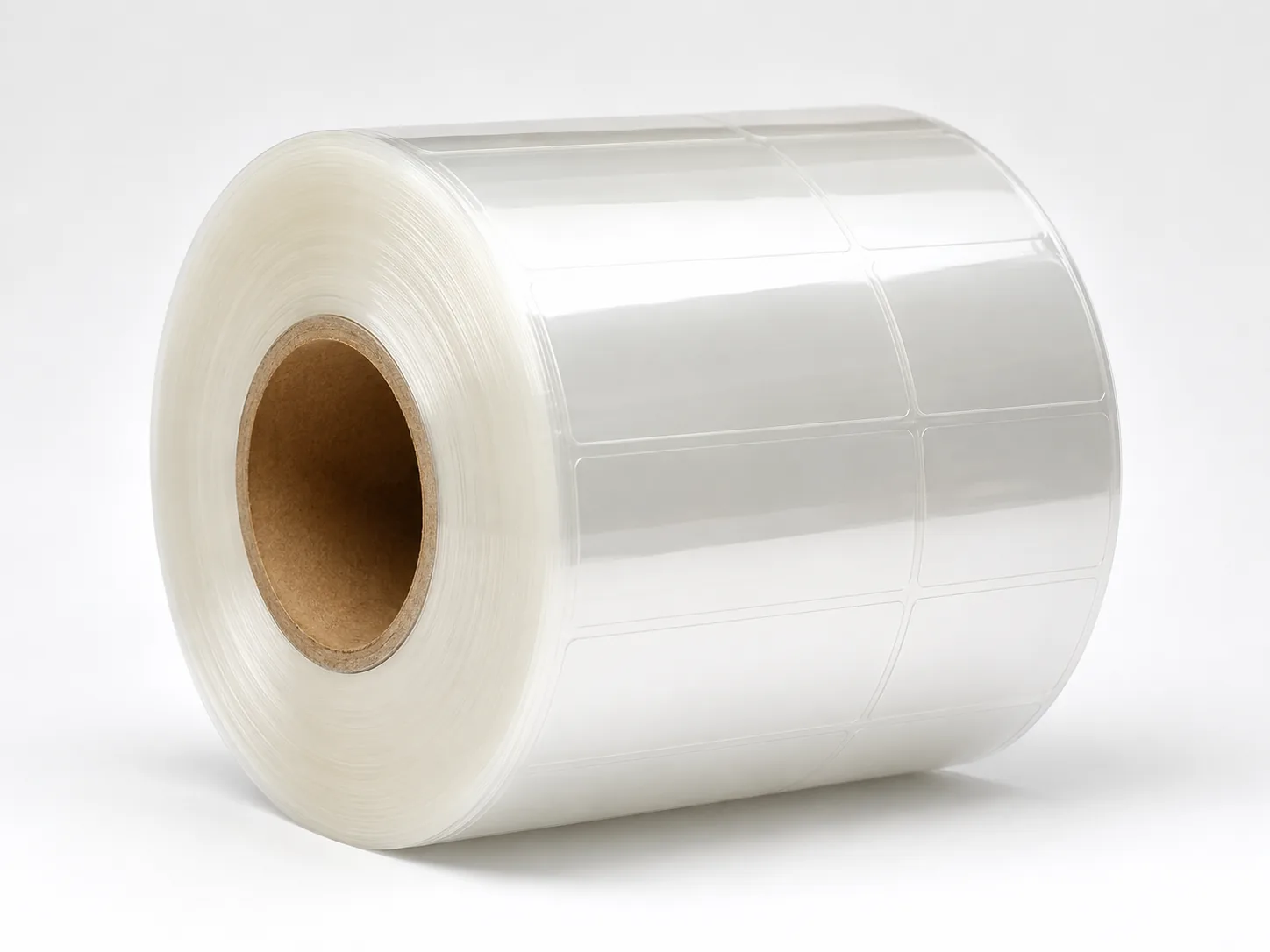
Quick answer: what label material should PET bottles use?
The best label materials for PET bottles are usually clear BOPP, white BOPP, metallized BOPP or wash-off label constructions, depending on shelf appearance, moisture exposure, recycling requirements and labeling speed. For recyclable PET packaging, the adhesive must separate cleanly during washing while the PET flakes remain suitable for recovery.
- Clear BOPP for no-label-look PET bottles
- White BOPP for opaque waterproof labels
- Metallized BOPP for premium shelf impact
- Wash-off adhesive for PET bottle recycling
- PET film when higher heat, oil or chemical resistance is needed
Best Label Materials for PET Bottle Applications
| PET bottle requirement | Recommended material | Why it works |
|---|---|---|
| Clear no-label look | Clear BOPP + clear adhesive | High clarity, moisture resistance and premium shelf appearance |
| White waterproof label | White BOPP | Good opacity, water resistance and stable converting performance |
| Premium metallic decoration | Silver metallized BOPP | Reflective finish for beverage, cosmetics and promotional packaging |
| Recycling compatibility | Wash-off adhesive construction | Helps label separate during bottle washing and recycling |
| Oil, chemical or heat exposure | PET film label material | Better durability against demanding filling or end-use conditions |
| Cold storage or condensation | Film facestock + suitable adhesive | Helps reduce edge lifting and label peeling in wet conditions |
PET bottle labeling challenges
Why do labels peel off PET bottles?
Peeling on PET usually comes from a mismatch between the bottle surface and the adhesive. Blow-moulded PET has relatively low surface energy, and mould release residue, dust or plasticiser migration reduces it further. Labelling a bottle that is still warm from filling, or applying to a tightly curved neck or a squeezable panel, adds stress the adhesive must hold while it builds ultimate bond. A film facestock with a general-purpose permanent acrylic that is dyne-matched to the bottle, applied to a clean, dry, room-temperature surface, resolves most cases.
What causes bubbles on BOPP labels?
Bubbles and wrinkles on BOPP are almost always application-related rather than a facestock defect: air trapped between the label and a curved panel, too little applicator pressure or brush-roller contact, or a label that is too wide for the bottle radius. Static and high line speed make it worse. Reducing label width, increasing wipe-down pressure and confirming the roll is wound in the correct direction usually removes the entrapped air.
How does condensation affect PET bottle labels?
Chilled and cold-chain PET bottles carry a water film that migrates under the label edge. Paper facestocks absorb it, swell and lift; a film facestock does not. For refrigerated beverages and personal-care products stored in humid conditions, specify a BOPP or PET facestock with a wet-tack or cold-apply permanent adhesive so the label keeps its edge seal after repeated warm-up and cool-down cycles.
Why does recycling require wash-off adhesive?
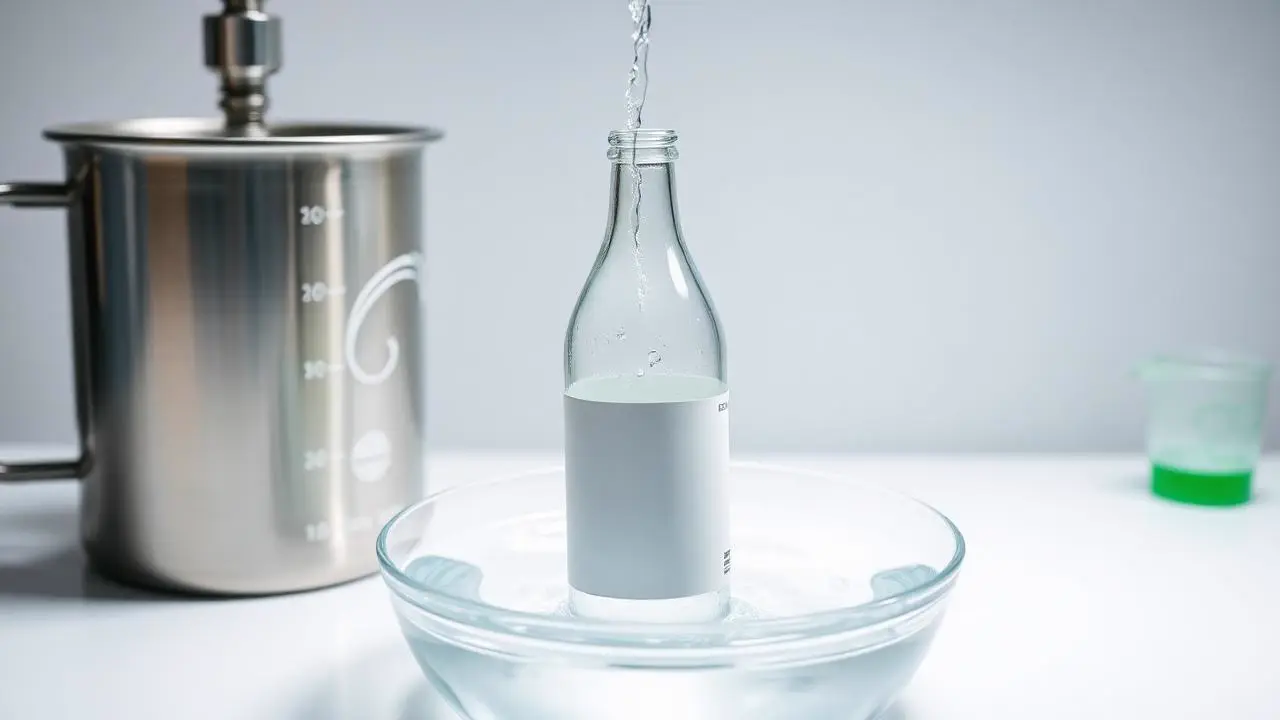
PET bottle recycling grinds bottles into flake and washes them in hot caustic solution. A standard permanent adhesive stays on the flake as residue and can carry ink and facestock fragments into the recovered PET, lowering its grade. A wash-off construction is designed to release the whole label and leave the flake clean, which is why brands with recyclable PET packaging or extended producer responsibility obligations specify it.
Most of these issues are settled before mass production by trialling the exact construction on the real bottle. If recycling compatibility is part of the brief, our wash-off label testing guide describes the caustic wash sequence buyers usually ask for.
Developing a label that also carries the bottle? Review material requirements for wearable bottle labels.
Recommended AllinLabel materials for PET bottles
- 01
Clear BOPP Label Material
Transparent BOPP facestock for the no-label look on clear PET bottles, with clear adhesive to keep the panel visually invisible.
No-label look - 02
White BOPP Label Material
Opaque white film facestock for waterproof PET bottle labels that need solid coverage, strong ink density and dimensional stability.
Opaque, waterproof - 03
Silver Metallized BOPP
Metallized BOPP for premium beverage, cosmetics and promotional PET packaging that needs a reflective metallic shelf presence.
Metallic finish - 04
PET Film Label Material
PET facestock for PET bottles exposed to oil, chemicals or higher temperatures during filling, transport or end use.
Heat & chemical resistant - 05
Wash-Off Adhesive
Wash-off adhesive constructions engineered to release the label during the caustic wash step of PET bottle recycling.
Recycling compatible
Testing checklist before mass production
- 1Check bottle material and surface energy
- 2Test label adhesion after filling
- 3Test moisture and condensation resistance
- 4Check automatic labeling speed and dispensing
- 5Test wash-off performance if recycling is required
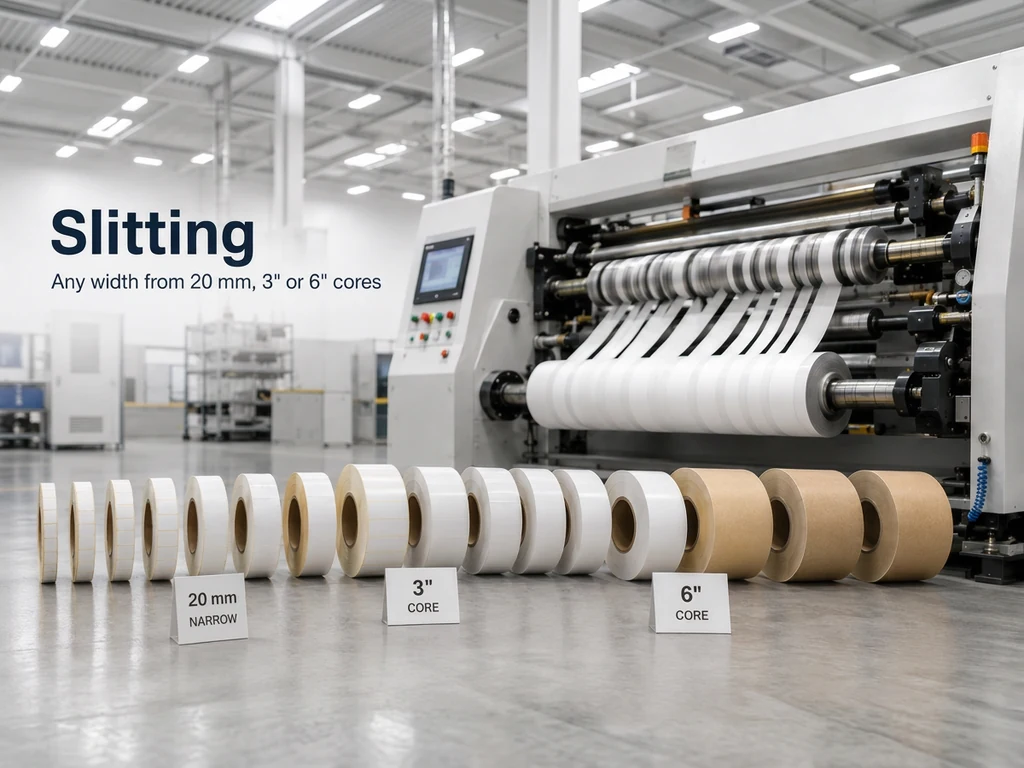
- 6Confirm roll width, core size, liner type and winding direction
PET bottle label material FAQ
- What is the best label material for PET bottles?
- For most PET bottles the best starting point is a BOPP film facestock: clear BOPP for a no-label look, white BOPP for opaque waterproof labels and metallized BOPP for premium decoration. Choose PET film instead when the bottle sees oil, chemicals or higher heat, and add a wash-off adhesive when the bottle must be recycled.
- Are BOPP labels suitable for PET bottles?
- Yes. BOPP is the most widely used facestock for PET bottles because it is moisture resistant, dimensionally stable, squeeze-tolerant and runs well on automatic labelling lines. It also conforms to the curved panels of a typical beverage or personal-care bottle without cracking or wrinkling.
- Should PET bottle labels use wash-off adhesive?
- Use wash-off adhesive when the bottle enters a PET recycling stream or when a brand, retailer or regulation requires recyclable packaging. For bottles that are not collected for PET recovery, a standard permanent acrylic adhesive is normally sufficient and less expensive.
- What label material is best for clear PET bottles?
- Clear BOPP with a clear permanent adhesive gives the cleanest no-label look on transparent PET, since both the film and the adhesive layer stay optically clear after application. Keep the application surface clean and dry, because dust and moisture show as haze under a transparent label.
- How do you prevent labels from peeling on PET bottles?
- Match the adhesive to the bottle's surface energy, label the bottle when it is clean, dry and at room temperature, keep the label size within the panel radius, and give the applicator enough wipe-down pressure. Then confirm the bond after 24 hours under the real filling, storage and transport conditions.
- Is PET film better than BOPP for PET bottle labels?
- Not automatically. PET film offers higher heat, oil and chemical resistance and greater stiffness, so it suits demanding filling or industrial conditions. For standard beverage, personal-care and household PET bottles, BOPP delivers the required performance with better conformability and lower cost.
Request a quote or a free sample
Send us your facestock, adhesive, liner and roll specification. Low MOQ, OEM/ODM, export to 60+ countries.