
Why wash-off label testing matters
A label can look sustainable on a specification sheet and still fail in the recovery stream. The three failure modes that matter commercially are adhesive residue left on the container, facestock fragments that break up instead of separating as whole labels, and ink or coating that discolours the wash water or the recovered material.
Those outcomes depend on the whole construction working together — facestock, adhesive, ink system and any varnish or laminate — under the specific conditions of your wash process. A construction that separates cleanly at 80 °C with caustic may stay firmly bonded in a cold, detergent-only rinse.
Container type changes the requirement as much as the wash does. PET bottles are usually ground into flake and washed as a mixed stream; HDPE and PP containers vary widely in wall stiffness and surface treatment; returnable glass goes through a hot caustic bottle washer designed to strip labels; one-way glass is remelted, so the priority shifts to sorting and contamination rather than surface cleanliness. For the broader glass-package selection question — paper, BOPP, PET, permanent or wash-off — see label materials for glass bottles and jars.
Testing early is cheaper than testing late. A bench trial on real containers takes days; a rejected pallet of printed labels — or a recycler complaint after launch — costs far more. If you are still narrowing the shortlist, our wash-off adhesive label materials and recyclable-compatible label materials pages describe the constructions most often trialled for these applications.
Wash-off testing matrix by container type
Start by locating your pack in the matrix below, then build the test protocol around that row. The buyer question in the last column is the one that most often exposes an unstated assumption between brand, converter and recycler.
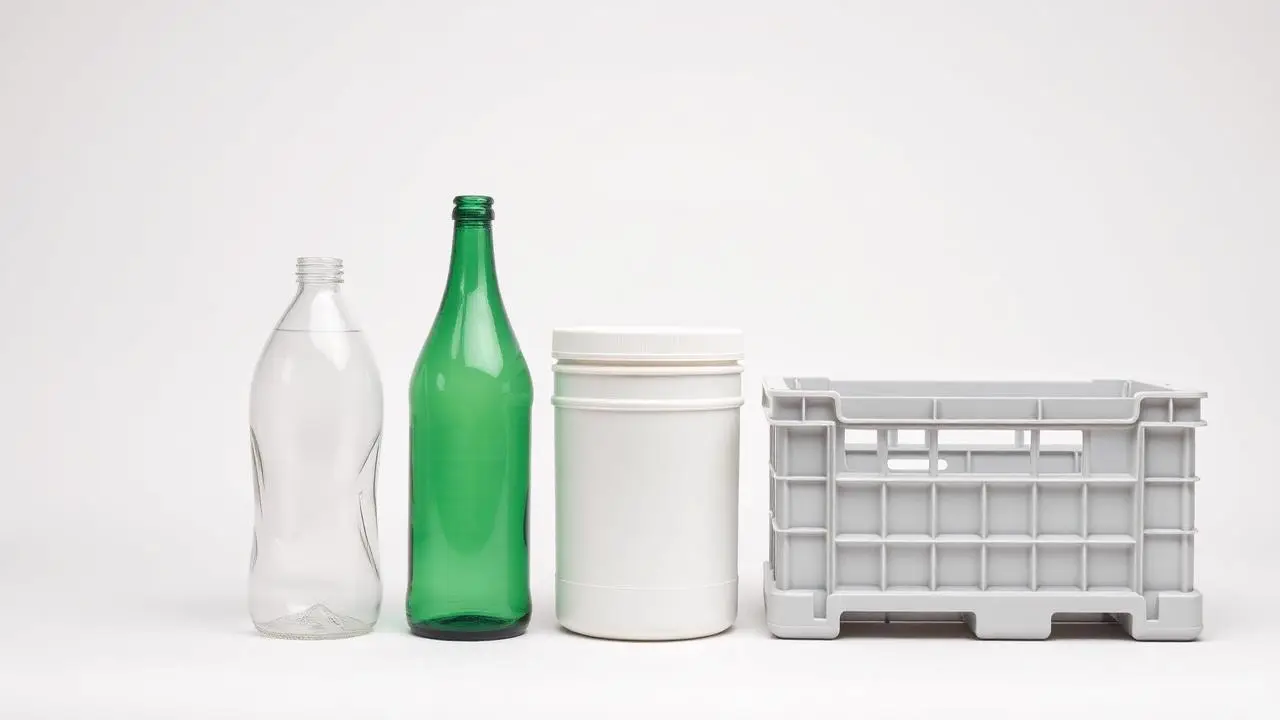
| Container type | Common packaging use | What to test | Main failure risk | Buyer question to ask |
|---|---|---|---|---|
| PET bottle | Water, soft drinks, juice, household liquids | Label separation in a hot caustic wash of ground flake; residue on flake; ink and dye release | Adhesive residue and dye bleed carried into the recovered flake | Which recycler and which wash recipe will actually process this bottle? |
| HDPE / PP container | Dairy, personal care, lubricants, agrochemicals | Bond strength on a low surface energy wall; separation at the target temperature; residue after drying | Label stays bonded, or the facestock tears and leaves fragments | Is the container surface treated, and how stiff or squeezable is the wall? |
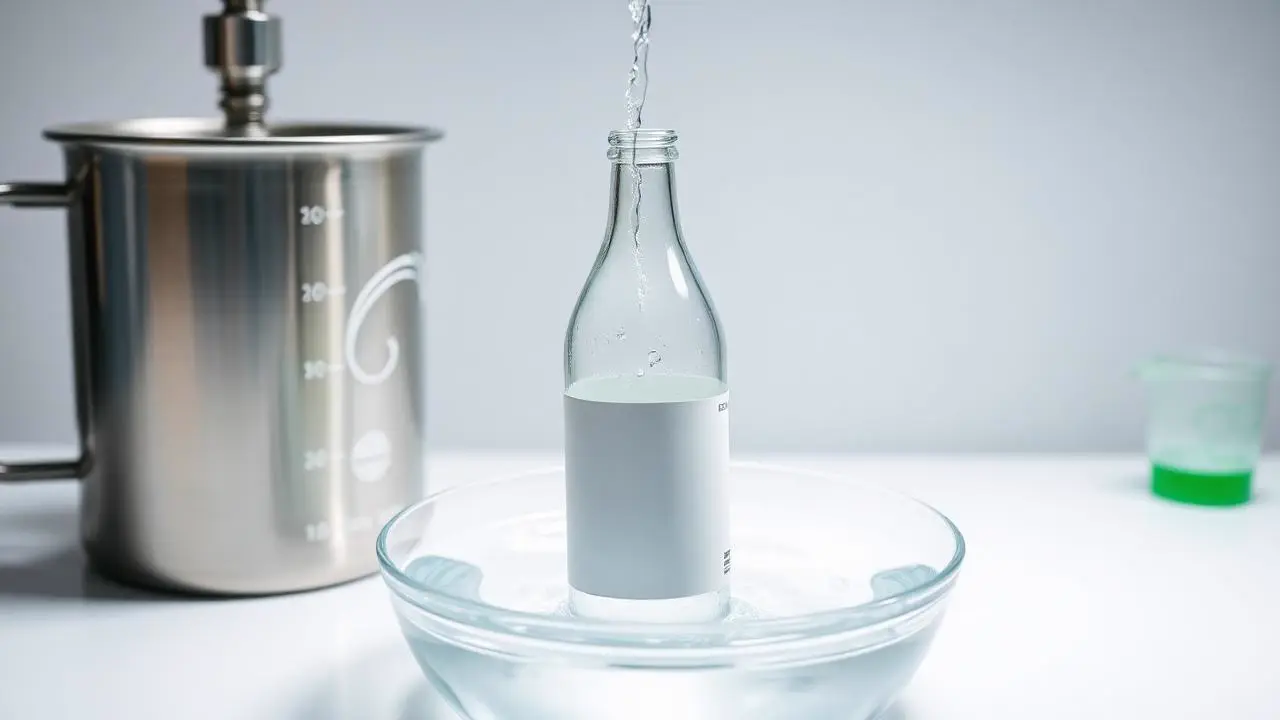
| Returnable glass bottle | Beer, mineral water, milk, refillable formats | Removal in a hot caustic bottle washer within the line dwell time; label carry-over in the caustic bath | Slow release, torn labels blocking screens, adhesive smear on the reused bottle | What is the washer temperature, caustic concentration and dwell time? |
| Single-use glass bottle | Wine, spirits, sauces, premium beverages | Behaviour during crushing and sorting; ink and adhesive contamination of cullet | Contamination that downgrades cullet quality rather than surface residue | Is the priority reuse, cullet quality or shelf appearance? |
| Reusable crate or tray | Logistics pooling, produce, bakery, beverage distribution | Full removal in an industrial crate washer; repeated cycles on the same surface | Ghosting and adhesive build-up after multiple label-and-wash cycles | How many wash cycles must one crate survive with clean re-labelling? |
Test conditions to define before requesting samples
Define the test before you order the sample. Most inconclusive wash-off trials fail because two parties tested different things — a different container, a different temperature or an undocumented idea of what counts as a pass.
Send the checklist below with your enquiry. Where you do not yet know a value, say so explicitly rather than guessing; an unknown wash temperature is useful information, a wrong one is not.
- Container material and wall construction (PET, HDPE, PP, glass, crate polymer)
- Label facestock preference: paper, PP, PE or PET film
- Adhesive type and whether removal must be alkaline, hot water or ambient
- Print method and ink coverage, including varnish or laminate
- Wash temperature range in °C, minimum and maximum
- Dwell time in the wash, in seconds or minutes
- Cleaning chemistry: caustic concentration, detergent, additives, pH
- Mechanical action: agitation, friction, water pressure, flake tumbling
- Recycling or reuse workflow and the operator that will run it
- Pass/fail definition for label separation, adhesive residue and water discolouration
Published recycling test protocols to align your trial with
Bench trials become far more useful when their conditions mirror a published protocol, because recyclers and brand owners already read results in that language. Three reference frameworks are widely used in export packaging work, and all three publish their documents openly.
The Association of Plastic Recyclers (APR) maintains Design® Guide test protocols used in North America, including laboratory wash procedures for PET and polyolefin containers that describe wash chemistry, temperature and evaluation steps. The European PET Bottle Platform (EPBP) publishes design-for-recycling guidance and evaluation protocols for PET bottles and their labels for the European stream. RecyClass publishes design-for-recycling guidelines and test methods covering label and adhesive compatibility across several polymer streams.
Use them to define the test, not to describe the product. Naming a protocol tells your supplier which wash chemistry, temperature band and pass criteria to trial against. It is not the same as an approval: a construction is only compliant when it has been evaluated under that protocol for your exact facestock, adhesive, ink and container. AllinLabel does not claim APR, EPBP or RecyClass approval for these materials; we supply samples so that you, your converter or your recycler can run the evaluation.
Where a protocol conflicts with your actual line — a bottle washer running cooler than the reference procedure, for example — test both. The protocol tells you how the market will judge the construction; your own line tells you whether it will work in production.
- Which protocol your customer or recycler expects results against (APR, EPBP, RecyClass or an internal method)
- The exact wash step in that protocol you are replicating: temperature, caustic concentration, dwell and agitation
- Whether evaluation is on whole containers, cut sections or ground flake
- The evaluation criteria you will report: label separation, residue, flake or water discolouration
- Who runs the test and whether an independent laboratory report is required
PET bottle recycling: what to verify
For PET, verify three things in sequence: does the label separate from the flake during the wash, does adhesive stay behind on the PET surface, and does anything from the label discolour the wash water or the recovered flake.
Separation behaviour in the wash tank also matters because many PET lines rely on density separation. A film facestock that behaves differently from PET in water can be easier or harder to remove from the stream depending on the line design, so the recycler's own process is the reference point, not a general rule.
Do not assume a construction meets any published recycling protocol unless that has been verified for your exact combination. We do not claim approval under any specific recycling design guideline for these materials; where a market requires it, plan for evaluation with your recycler and confirm results with sample testing.
If recycled content is also part of the brief, review rPET and PCR label facestock alongside the adhesive decision — the two are usually specified together for beverage packs.
Request application-specific sample testingHDPE and PP containers: what to verify
For HDPE and PP, the controlling variables are surface energy and container stiffness. Polyolefin surfaces are low in surface energy, so the adhesive has to wet out well enough for a reliable bond through filling and distribution, then still release under wash conditions — a deliberately narrow window.
Squeezable containers add a second requirement: the label must tolerate flexing without lifting at the edges, since an edge that lifts during use will usually tear rather than separate cleanly later. Test on filled, handled containers, not only on empty ones.
Adhesive and liner choice interacts with application speed and container shape; the label adhesive and release liner selection overview sets out the trade-offs we work through with converters.
| Observation | Likely cause | What to change |
|---|---|---|
| Label lifts before washing | Insufficient wet-out on a low surface energy wall | Higher initial tack adhesive; confirm surface treatment; check application pressure |
| Label will not release in the wash | Wash temperature or chemistry below the release threshold | Confirm actual bath temperature and dwell; retest with the real chemistry |
| Facestock tears into fragments | Facestock too weak for the mechanical action | Move from paper to a film facestock; review label size and corner radius |
| Adhesive residue rings remain | Adhesive splitting rather than releasing as one film | Alternative wash-off adhesive; longer dwell; confirm with sample testing |
| Results vary between batches | Container batch variation or inconsistent wash conditions | Test across container batches and log wash parameters for each run |
Glass packaging: what to verify
Glass splits into two very different cases. A returnable bottle goes into a hot caustic washer that is designed to strip labels within a fixed dwell time, so the label must release fully and predictably, and ideally leave the caustic bath easy to screen. A single-use bottle is crushed and remelted, so the question becomes whether the label and adhesive contaminate the cullet or interfere with sorting.
Public industry guidance from packaging and recycling bodies makes the same broad point: labels can either enable or hinder reuse and recycling depending on how cleanly they separate. Read that material as topic coverage for your own protocol, then test against your actual bottle washer or cullet processor.
Decoration expectations differ too. Premium wine and spirits often use textured or heavier papers whose fibre behaviour in caustic must be checked deliberately; see wine and spirits label materials for the facestock families involved, and food and beverage label materials for higher-speed beverage lines.
Residue and contamination checklist
Run this checklist at the end of every wash trial and record a written answer for each line. Photographs of the container surface before and after washing make later comparisons far easier.
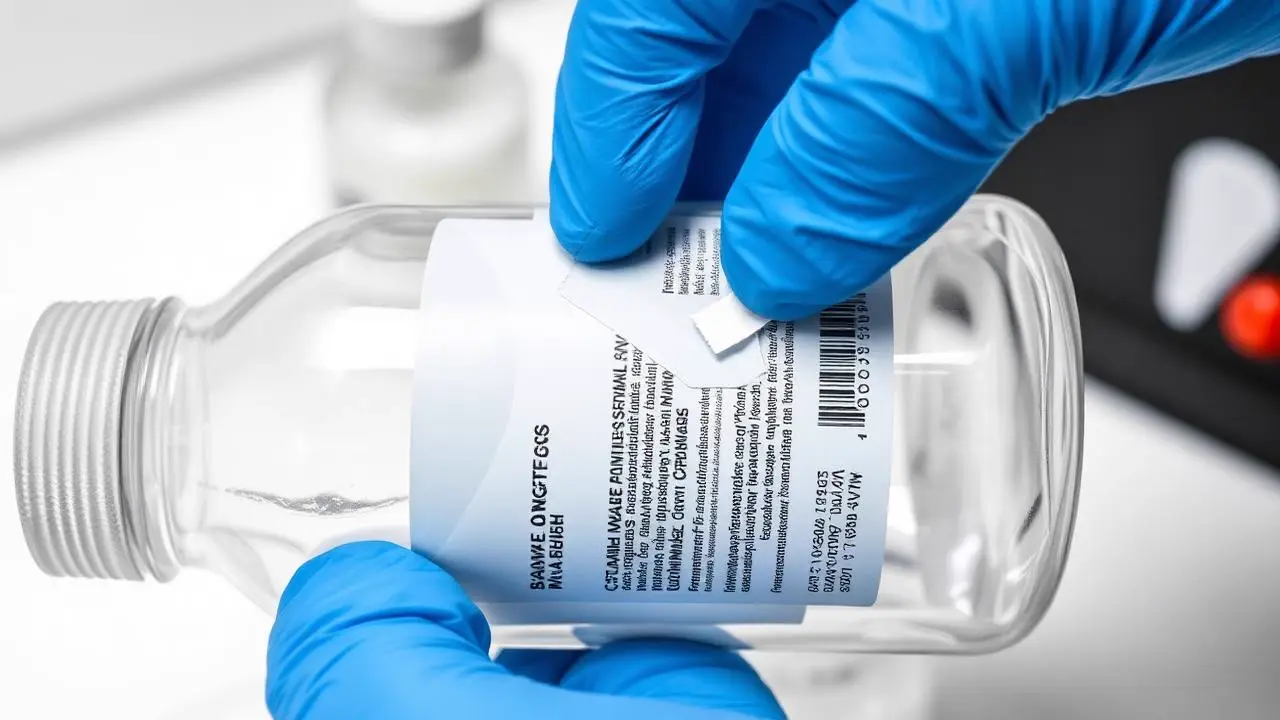
- Does the label detach fully within the target dwell time?
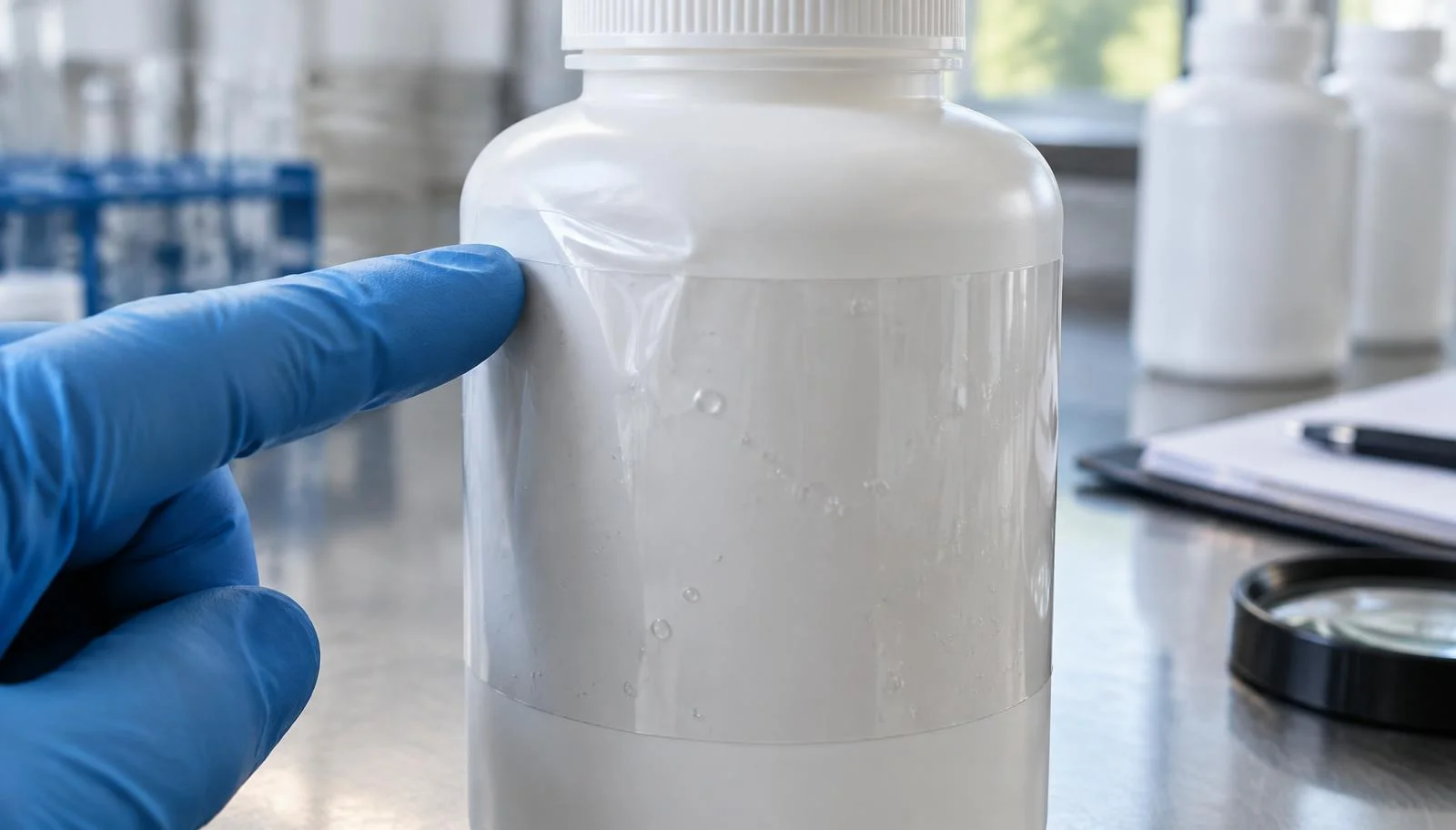
- Does any adhesive remain on the container surface, including tacky films and visible rings?
- Does the paper or film fragment instead of releasing as whole labels?
- Does ink bleed, discolour the wash water or transfer to the container?
- Does the container surface remain suitable for reuse or for the recycling stream?
- Are results consistent after storage, humidity exposure or cold-chain conditions?
- Are results repeatable across at least three runs and more than one container batch?
How to request a wash-off label sample from AllinLabel
Send the information below with your enquiry and we can narrow the shortlist to a small number of candidate constructions before any material ships. The more precisely the wash process is described, the fewer trial rounds are needed.
- Container type and a photograph of the actual pack
- Application industry and product filled
- Label size, shape and whether it is front, back or wrap-around
- Facestock preference: paper, PP, PE or PET film
- Printing method: flexo, offset, digital, thermal transfer
- Target wash process: temperature, dwell time, chemistry, mechanical action
- Destination market and any local recycling requirements
- Required documentation, for example technical data sheets or declarations
- Expected trial volume and indicative annual volume
Set expectations before production
Actual wash-off performance depends on container material, adhesive, facestock, ink system, wash temperature, dwell time, cleaning chemistry and the recycling or reuse process in the destination market. No single construction performs identically across all of them.
Where exact values are not available for your combination, treat the specification as provisional and confirm with sample testing on your own containers and wash line. That is the only result a recycler or a brand audit will accept.
Frequently asked questions
- What is a wash-off label?
- A wash-off label uses an adhesive designed to release from the container under defined wash conditions — typically warm or hot water, often with an alkaline cleaning agent — so the label separates instead of staying bonded through recycling or bottle reuse.
- Are wash-off labels always recyclable?
- No. A wash-off adhesive helps the label separate, but the recycling outcome also depends on the facestock, inks, container material and the recycler's process. Whether a specific pack is accepted is decided by the recovery stream it enters, not by the label alone.
- What temperature is needed for wash-off labels?
- It depends on the construction and the process; industrial wash lines commonly run warm to hot alkaline conditions, while some constructions target lower temperatures. Define your actual bath temperature and dwell time, then confirm the release window with sample testing.
- Can wash-off labels be used on PET bottles?
- Yes, wash-off constructions are frequently trialled for PET bottles. Verify label separation during the flake wash, adhesive residue on the PET surface and any ink or dye release, using the recycler's own wash recipe as the reference.
- Are wash-off labels suitable for glass bottles?
- They are used on both returnable and single-use glass. Returnable bottles need full release within the bottle washer's dwell time; single-use glass is judged mainly on contamination of the cullet during crushing and remelting.
- What causes adhesive residue after washing?
- Usually the adhesive splits rather than releasing as one film, or the wash conditions fall short of the release window — temperature too low, dwell time too short, or different chemistry from the one assumed at specification. Container surface variation can also contribute.
- Should I test the label before mass production?
- Yes. Run a bench or line trial on the real container with the intended print and wash conditions, and repeat it across batches. Testing before production is far cheaper than reworking printed stock or handling a recycler complaint after launch.
- What information should I send to request a sample?
- Container type and photo, industry, label size, facestock preference, printing method, wash temperature and dwell time, cleaning chemistry, destination market, required documentation and expected trial volume.
If you are buying material before converting, start from self-adhesive label stock rolls and then narrow the facestock, adhesive and liner with our technical team.
Related materials
Related reading
More guides on sustainability and related topics
 SustainabilityWash-off labels for PET bottle recycling: what actually gets validatedA wash-off claim is only meaningful against a stated wash condition. Here is what recyclers actually measure.6 min read
 TroubleshootingWhy Labels Bubble, Wrinkle and Tunnel on Bottles and ContainersBubbles, wrinkles and tunnels look alike but have different causes: trapped air at application, gas from the container, a label that cannot follow the shape, or stress built into the roll.9 min read
 TroubleshootingWhy Labels Fail to Dispense and Liners Break on High-Speed ApplicatorsLabels that stay on the liner, fly past the product, or a liner that snaps mid-run usually trace back to release, die-strike, liner choice, tension or peel-plate setup.9 min read
Request a quote or a free sample
Send us your facestock, adhesive, liner and roll specification. Low MOQ, OEM/ODM, export to 60+ countries.