
Material comparison
BOPP vs PET Label Material: Which Film Facestock Should You Choose?
Use this guide to compare BOPP and PET self-adhesive label materials by container, print method, resistance requirement, roll format and buyer risk. It is written for converters, printers and packaging buyers who need the right film facestock before requesting samples or a quote.
Quick answer
BOPP is usually the better choice for clear, white or metallized packaging labels where moisture resistance, shelf appearance and cost control matter. PET is the better choice for durable labels exposed to higher heat, chemicals, solvents, abrasion or long service life. For squeeze tubes or soft bottles, compare PE film before choosing either material.
Final selection should be confirmed with adhesive, liner, container surface, printing method and sample testing.
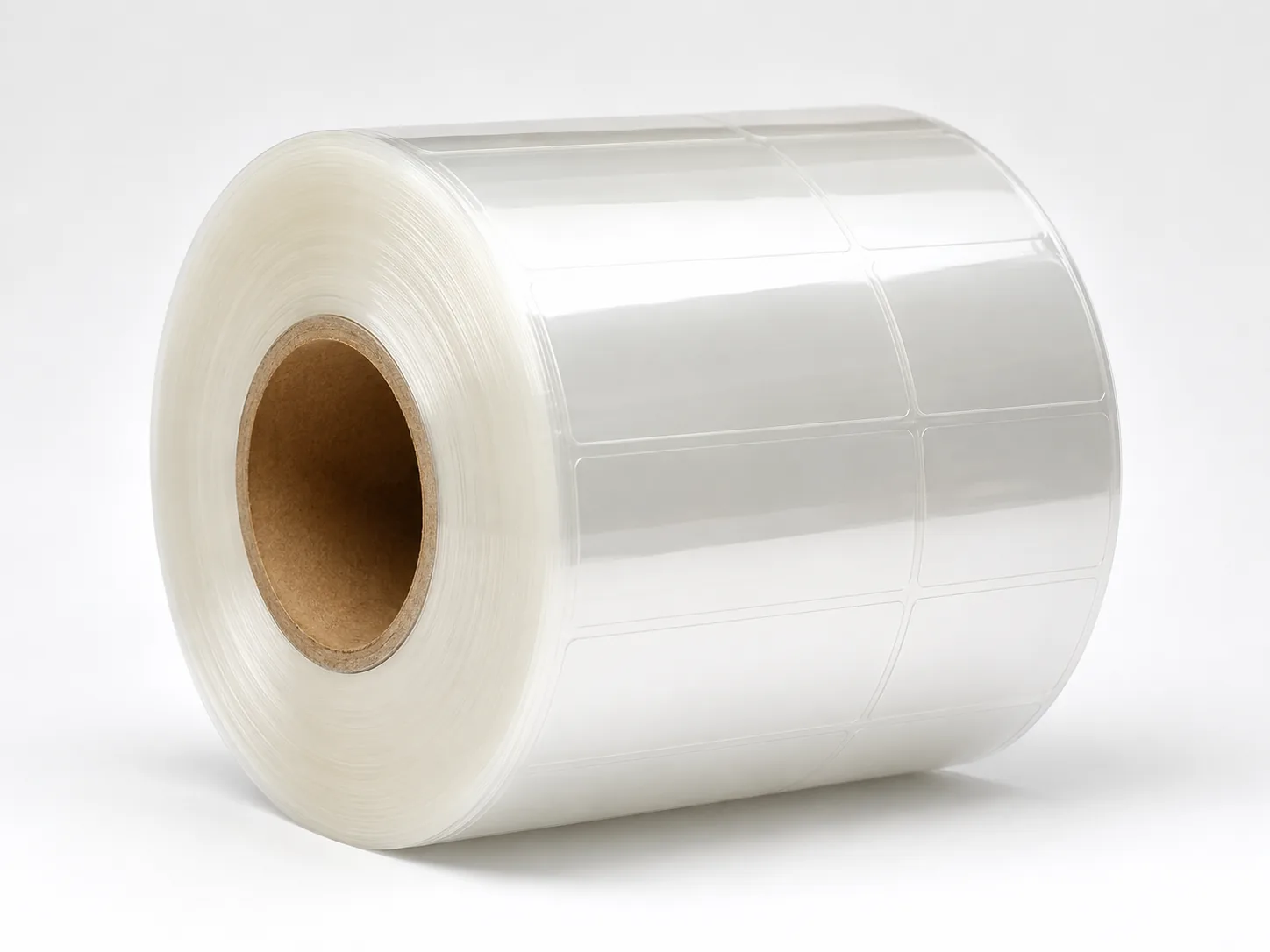
BOPP vs PET label material at a glance
| Selection factor | Choose BOPP when | Choose PET when | Buyer note |
|---|---|---|---|
| Main use | Clear, white or metallized packaging labels | Durable industrial, electronics, chemical or long-life labels | Start from the label environment, not only the film name |
| Appearance | Glossy white, clear no-label look and shelf packaging | White, clear, matte and silver, usually specified for durability | Confirm opacity, clarity and print method before ordering |
| Moisture resistance | Strong choice for chilled bottles, cosmetics and wet handling | Also resists moisture, but often chosen for harsher exposure | Adhesive and liner still decide final performance |
| Heat and chemical exposure | Suitable for many packaging uses, but not the first choice for high heat or harsh chemicals | Better for higher heat, solvents, abrasion and long service life | Ask for test samples when labels face cleaning, oils or solvents |
| Flexibility and container shape | Works well on many rigid bottles and packaging surfaces | Stiffer and more dimensionally stable | For squeeze tubes or very soft bottles, compare PE film |
| Cost control | Usually more cost-friendly for packaging labels | Usually specified when performance risk is higher | Do not choose PET only because it sounds stronger |
| Typical buyers | Converters, beverage brands, cosmetics packaging, food packaging | Industrial, electronics, chemical, pharmaceutical and durable goods buyers | Match facestock with adhesive, liner and roll format |
| Roll format | Jumbo roll, log roll and slit roll options | Jumbo roll, log roll and slit roll options | Confirm width, core, coating, adhesive and MOQ |
BOPP film
Biaxially oriented polypropylene facestock for clear, white and metallized packaging labels.
View material specsPET film
Polyester facestock for durable labels facing heat, chemicals, abrasion or long service life.
View material specsBOPP film vs PET film: side by side
| Criterion | BOPP film | PET film |
|---|---|---|
| Film construction | Polypropylene, biaxially oriented, available clear, white and metallized | Polyester, available white, clear, matte and silver |
| Stiffness | More flexible; follows many rigid bottle and packaging shapes | Stiffer and more dimensionally stable under load and temperature |
| Heat resistance | Suitable for normal packaging conditions, not for sustained high heat | Suitable for higher service temperatures; confirm the exact limit per grade |
| Chemical and solvent exposure | Handles water, condensation and light oils in packaging use | Better for solvents, cleaning agents and aggressive chemical contact |
| Abrasion and service life | Good for months of normal handling | Preferred where the print must stay legible for years |
| Print methods | UV flexo, UV inkjet and digital with a corona-treated top coat | UV flexo, screen, digital and thermal transfer with resin ribbon |
| Relative cost | Usually more cost-friendly for regular packaging volume | Usually specified when performance risk is higher |
| Roll format | Jumbo roll, log roll and slit roll | Jumbo roll, log roll and slit roll |
When to choose BOPP instead of PET
- Clear or white packaging labels where shelf appearance matters.
- Cosmetics, beverage, personal care and food packaging in normal handling conditions.
- Labels needing moisture and tear resistance, without harsh heat or aggressive solvents.
- A more economical film label stock for regular converter production.
- A transparent no-label look on glass, PET or HDPE containers — use clear BOPP.
- A bright, waterproof printed film label — use white BOPP.
When to choose PET instead of BOPP
- Labels facing higher heat, solvents, oils, chemicals, abrasion or longer service life.
- Durable industrial, electronics, battery, warning and rating-plate labels.
- Applications where dimensional stability matters more than softness or cost.
- Printed information that must stay readable after handling, cleaning or outdoor-like exposure.
- White, clear, matte or silver polyester film in a durable construction.
What is BOPP label material?
BOPP label material is a biaxially oriented polypropylene film facestock used for clear, white and metallized pressure-sensitive labels. It is commonly selected for packaging labels that need moisture resistance, tear resistance, good print appearance and a clean shelf look on bottles, cosmetics, food packaging and household products.
What is PET label material?
PET label material is a polyester film facestock used when labels need stronger dimensional stability, heat resistance, chemical resistance, abrasion resistance or long service life. It is often specified for electronics, industrial containers, chemical packaging, durable goods, rating plates and applications where the label must stay legible under tougher conditions.
When neither BOPP nor PET may be the best fit
BOPP and PET are not always the answer. For squeeze tubes, flexible bottles or containers that deform heavily during use, PE film may be a better facestock. For dry indoor labels where cost is the main concern, semi-gloss paper may be enough. For high-risk applications, request samples and test the exact adhesive, liner, substrate and print method before production.
BOPP vs PET by application
| Application | Recommended starting point | Why | Related page |
|---|---|---|---|
| Clear cosmetics bottle | Clear BOPP | No-label look, moisture resistance, strong shelf appearance | Clear BOPP |
| White waterproof packaging label | White BOPP | Film appearance, moisture resistance, cost control | White BOPP |
| Chemical container label | PET | Better resistance to chemicals, solvents and abrasion | PET film |
| Electronics or rating plate | PET | Dimensional stability, heat resistance, long service life | PET film |
| Squeeze bottle or tube | PE film | More conformable on flexible containers | PE film |
| Converter sourcing multiple film stocks | Label stock jumbo rolls | Compare paper, film, thermal and specialty materials in jumbo roll format | Label stock jumbo rolls |
Facestock is only one part of the label construction
A BOPP or PET facestock does not decide performance by itself. The adhesive, release liner, print method, roll width, die-cutting setup and service environment all affect the final label. For production orders, AllinLabel confirms the construction from the actual container, filling condition, storage condition and application line.
Adhesive
- Permanent acrylic for many packaging applications.
- High-tack adhesive for rough or difficult surfaces.
- Freezer or wash-off adhesive only when the application requires it.
- High-temperature adhesive may be needed for some PET applications.
Release liner
- White glassine, PET liner or CCK/kraft liner may be used depending on die-cutting, dispensing, label size and converting line.
- No single liner is always better; match release value to the adhesive and the line.
Printing method
- UV flexo, thermal transfer, screen or digital methods may be used depending on the material and durability requirement.
- For PET durable labels, resin ribbon or durable inks may be needed; confirm with your printer and sample test.
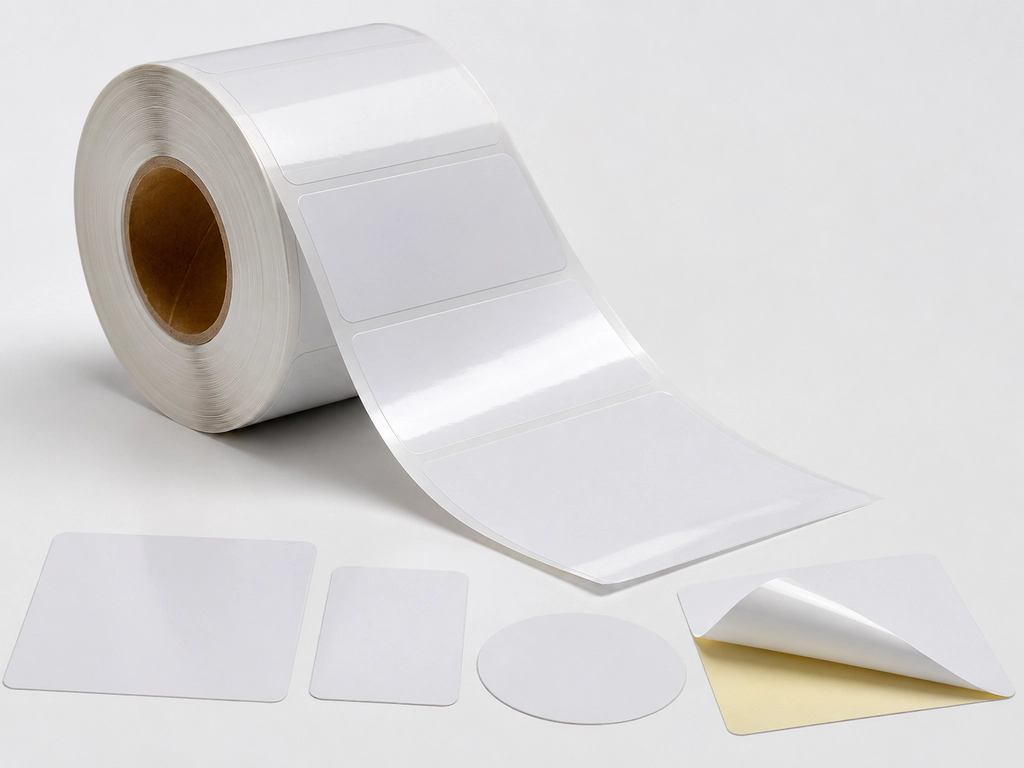
What to send before requesting BOPP or PET samples
- Label application and end-use market
- Container material: glass, PET bottle, HDPE, carton, metal, chemical drum, electronics housing
- Surface shape: flat, curved, small diameter, squeezable, textured or rough
- Service condition: indoor, outdoor, chilled, wet, chemical exposure, heat exposure
- Printing method: UV flexo, thermal transfer, digital, screen, offset or other
- Required facestock: clear BOPP, white BOPP, metallized BOPP, white PET, clear PET, matte PET or silver PET
- Adhesive requirement: permanent, removable, high-tack, freezer, wash-off or high-temperature
- Release liner preference: glassine, PET liner or CCK/kraft
- Roll format: jumbo roll, log roll or slit roll
- Roll width, core size and annual volume
- Need for A4 sheet samples, sample roll or trial order
Frequently asked questions
- Is BOPP or PET better for waterproof labels?
- Both BOPP and PET are film facestocks with good moisture resistance. BOPP is commonly used for waterproof packaging labels on bottles, cosmetics and food packaging. PET is usually selected when waterproof performance must also be combined with higher heat, chemical, abrasion or long-life requirements.
- Is PET label material stronger than BOPP?
- PET is generally the stronger and more dimensionally stable film for demanding label applications. It is often used for industrial, electronics, chemical and durable labels. BOPP is still a strong packaging film, but it is usually chosen for appearance, moisture resistance and cost control rather than harsh-service durability.
- Should I use BOPP or PET for cosmetic bottle labels?
- For most cosmetic bottle labels, clear BOPP or white BOPP is a good starting point because it gives a clean shelf appearance and resists moisture. PET may be considered when the label faces solvents, oils, heat, abrasion or a longer service life requirement.
- Can BOPP replace PET label material?
- BOPP can replace PET in some normal packaging applications where high heat, solvents and long-term abrasion are not major risks. It should not be used as a direct replacement for PET in durable industrial, electronics, chemical or high-temperature label applications without testing.
- When should I choose PE film instead of BOPP or PET?
- Choose PE film when the container is squeezable, flexible or highly curved and the label needs to move with the package. BOPP and PET are better for many rigid packaging and durable applications, but PE is often more conformable on tubes and soft bottles.
- What information does AllinLabel need to quote BOPP or PET label material?
- Send the container material, surface shape, service environment, printing method, facestock choice, adhesive requirement, liner preference, roll width, core size, annual volume and sample requirement. These details help confirm whether BOPP, PET or another label material is the better starting point.
Related material pages
Need help choosing BOPP or PET label material?
Send your container, printing method, roll width, adhesive requirement and service condition. AllinLabel can recommend a starting construction, provide samples and confirm whether BOPP, PET, PE or another label material is a better fit for production.
Once the construction is decided, both options can be quoted as self-adhesive label stock rolls for slitting and rewinding in your own plant.
More comparisons
- Semi-gloss paper vs white BOPP label material
Compare semi-gloss coated paper and white BOPP film label material on water resistance, printability, conformability, cost and typical applications.
- Permanent vs removable label adhesive
Compare permanent and removable pressure-sensitive label adhesives on ultimate bond, residue, surface energy, temperature range and typical applications.
- Glassine vs PET release liner
Compare glassine paper and PET film release liners on tensile strength, die-cutting, dispensing speed, caliper, moisture stability and recycling.
- PP synthetic paper vs PE film label material
Compare PP synthetic paper and PE film label facestocks on stiffness, squeezability, tear resistance, printability and container compatibility.
- Acrylic vs Hotmelt Label Adhesive: Which Should You Choose?
Compare acrylic and hotmelt label adhesives by tack, bond, surface, temperature, residue risk, application and sample request details.
Request a quote or a free sample
Send us your facestock, adhesive, liner and roll specification. Low MOQ, OEM/ODM, export to 60+ countries.