
Start with the service environment, not the price
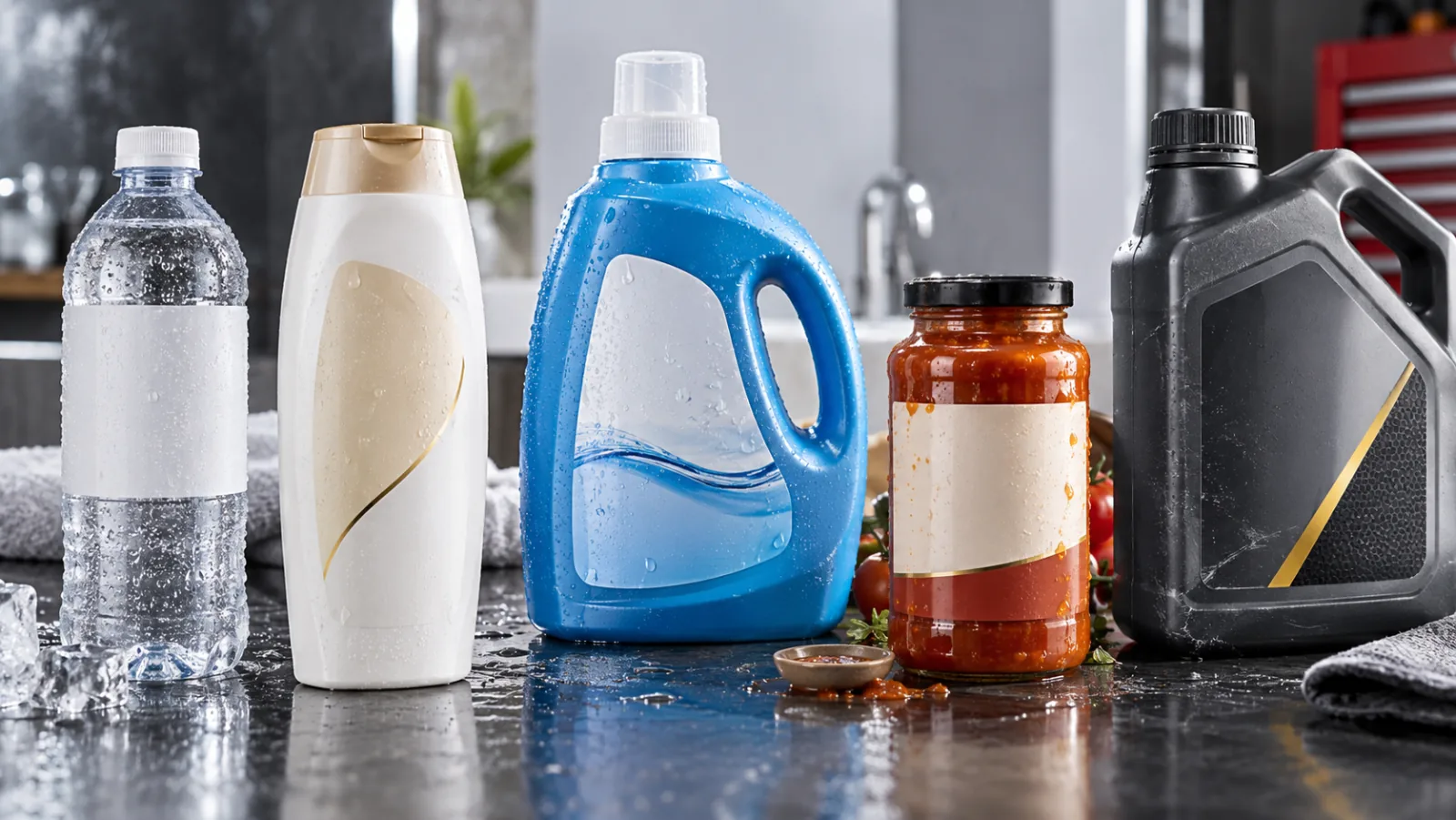
Almost every failed label we are asked to investigate was specified on price and then met an environment nobody described at quotation stage: an ice bucket, a hot-fill line, a solvent wipe-down, six months on a garden-centre shelf.
Write down four things before comparing grades: the container material, the temperature range from application to end of life, what liquids touch the label, and how long it has to look good.
- Dry indoor use, under 12 months — coated paper is usually enough.
- Condensation, ice water or hand washing — wet-strength paper or BOPP film.
- Oils, solvents, alcohol wipes — PET or PP film with acrylic adhesive.
- Outdoor or UV exposure over 12 months — film plus a UV overlaminate.
Direct comparison
The table below reflects the constructions we ship most often. Treat it as a shortlist, not a specification: line speed and container geometry can override any of it.
| Criterion | Coated paper | BOPP / PP film | PET film |
|---|---|---|---|
| Relative cost | Baseline | +30–50% | +60–100% |
| Water resistance | Poor (wet-strength: fair) | Excellent | Excellent |
| Oil / solvent resistance | Poor | Good | Excellent |
| Conformability | Fair | Good | Poor (stiff) |
| Service temperature | −10 to 80 °C | −20 to 100 °C | −40 to 150 °C |
| Typical use | Logistics, dry goods | Beverage, personal care | Chemical, asset, rating plates |
Where paper still wins
Premium wine, spirits and artisan food rely on the tactile feel of uncoated and textured papers, which no film reproduces convincingly. Paper also takes hot foil, embossing and screen varnish more readily, and it is easier to keep inside a recycling-compatible paper packaging stream.
Where film is non-negotiable
Squeeze tubes, chilled bottles standing in melt water, drums that get hosed down, and anything that has to stay scannable after months of sunlight. In those cases the correct question is not paper or film but which film, and whether the adhesive matches the surface energy of the container.
Frequently asked questions
- Is film always more expensive than paper?
- Per square metre, yes — typically 30–100% more. Per failed pack, no: a single relabelling run usually costs more than the film premium across the whole order.
- Can I print film on my existing flexo press?
- Yes, with a topcoated film matched to your ink system. Tell us the press and ink (UV flexo, water-based, HP Indigo, UV inkjet) and we supply the correct topcoat.
If you are buying material before converting, start from converter-ready label material rolls and then narrow the facestock, adhesive and liner with our technical team.
Related materials
Related reading
More guides on material selection and related topics
 Material selectionLabel materials for cold chain and frozen foodFrozen labelling fails at two moments: the second of application, and the first defrost cycle. Both are adhesive problems.5 min read
 Thermal printingDirect Thermal vs Thermal Transfer Labels: Which Material Should You Choose?A practical material selection guide for converters, printers, warehouse label buyers and packaging teams choosing between direct thermal and thermal transfer label materials.11 min read
 TroubleshootingWhy Pressure-Sensitive Labels Peel Off: Causes and TroubleshootingEdge lift is a diagnosis before it is a purchase. Work out when and where the label starts to release, then decide whether the adhesive, the facestock or the application process has to change.10 min read
Request a quote or a free sample
Send us your facestock, adhesive, liner and roll specification. Low MOQ, OEM/ODM, export to 60+ countries.