
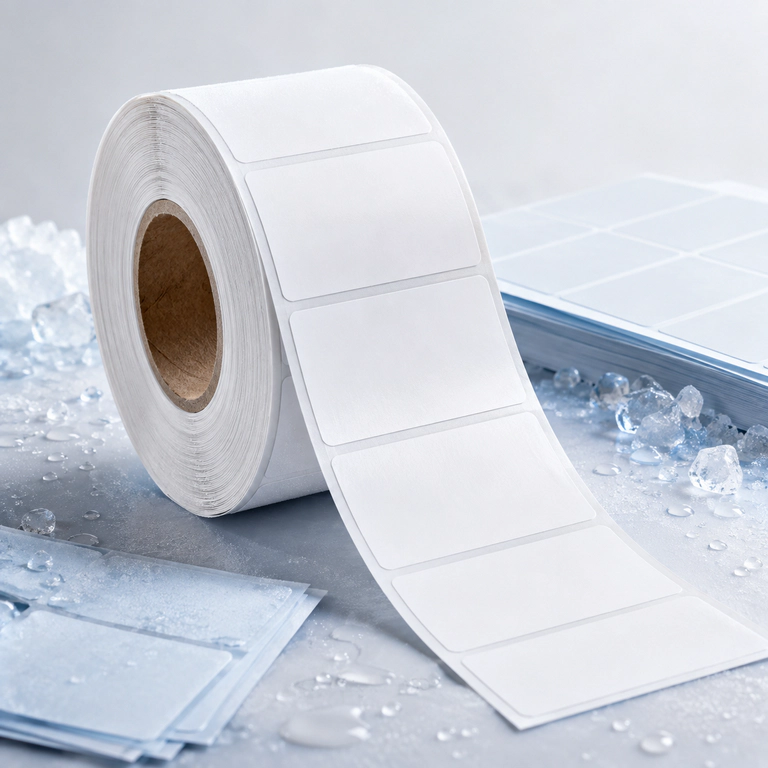
Two different jobs, two different adhesives
Deep-freeze adhesives stay soft enough to wet out at low temperature. That softness is a liability at room temperature, where they can ooze, so do not carry one across your whole range by default.
If the application step happens before blast freezing, a standard permanent acrylic with good initial tack is usually cheaper and cleaner to run.
Condensation and wet cartons
Moving product between a freezer and a packing hall coats it in condensation. Water at the bond line is what lifts label corners after a defrost cycle. Wet-surface adhesives, smaller label footprints and rounded corners all help.
Corrugated cartons in a chiller absorb moisture and lose surface strength, so a high-tack hotmelt often outperforms acrylic on outer packaging even when the inner pack uses acrylic.
Facestock choices that stay readable
Direct thermal paper is common for variable-weight food labels, but bare DT smears against wet gloves and frost. Protected direct thermal or thermal transfer on semi-gloss handles the same printers with far better survivability, and a synthetic face is worth it for long-stored stock.
- Variable-weight retail packs — protected direct thermal.
- Outer cartons in a chiller — thermal transfer semi-gloss with high-tack hotmelt.
- Long-stored frozen inventory — synthetic face with a deep-freeze adhesive.
Frequently asked questions
- What temperature should I quote you?
- Two numbers: the temperature of the product surface at the moment of application, and the lowest storage temperature afterwards. They drive different parts of the specification.
- Do freezer labels survive defrost cycles?
- A correctly specified construction does. Repeated condensation is the real test, so we run 24-hour cycling on samples of your actual pack before recommending.
If you are buying material before converting, start from label stock jumbo rolls and then narrow the facestock, adhesive and liner with our technical team.
Related materials
Related reading
More guides on material selection and related topics
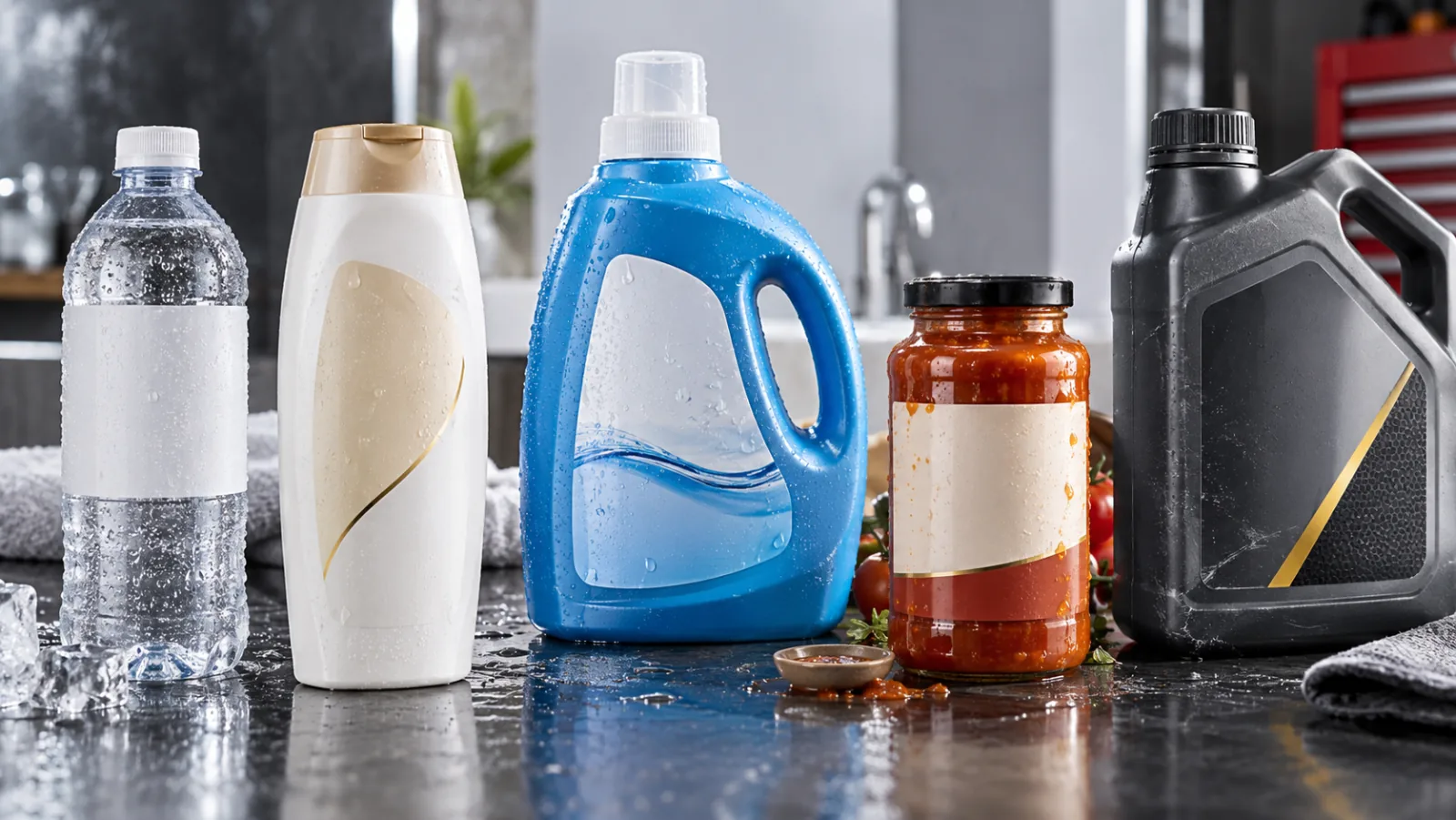 Material selectionPaper vs film label materials: how to choosePaper is cheaper and prints beautifully; film survives water, oil and abrasion. The decision comes down to the service life of the pack.6 min read
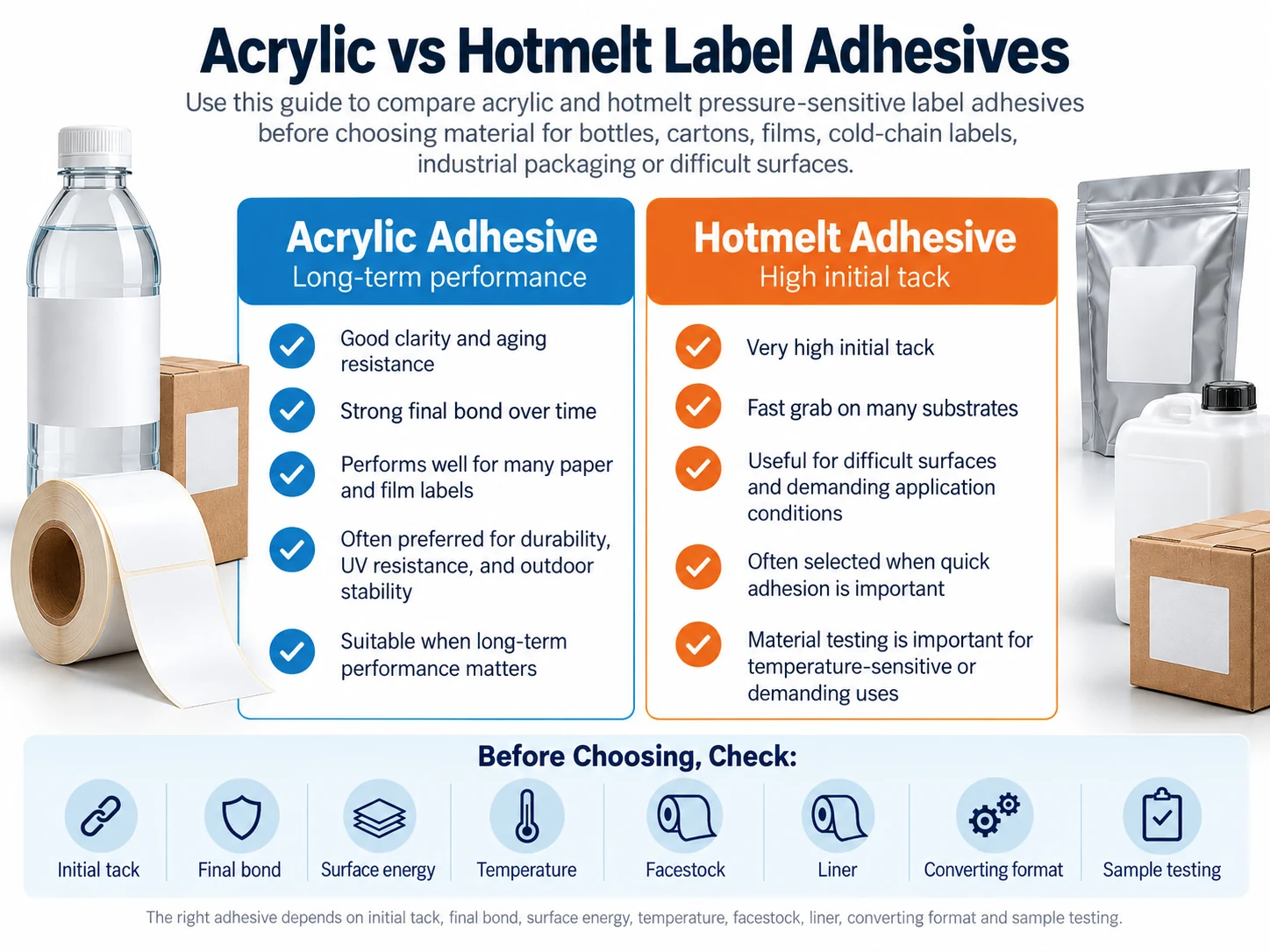 AdhesivesChoosing the right label adhesive: permanent, removable, freezer and wash-offThe facestock gets the attention, but nearly every label failure in the field is an adhesive that was never matched to the surface.7 min read
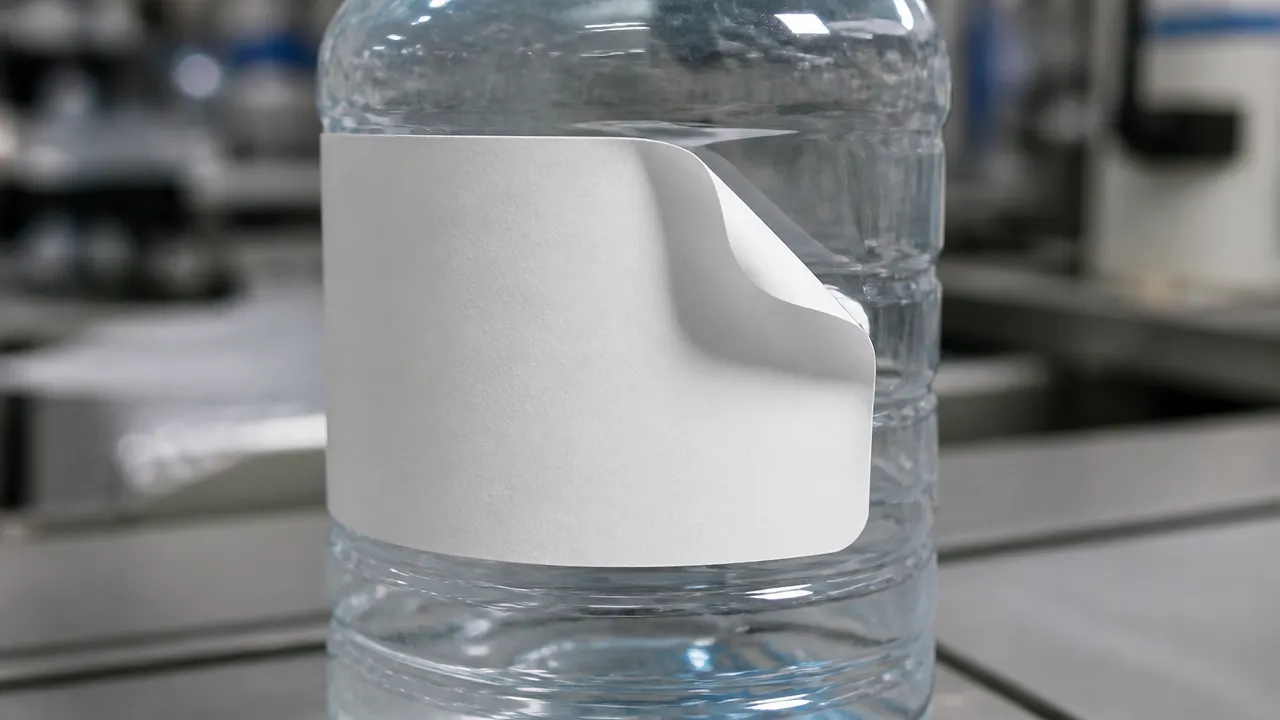 TroubleshootingWhy Pressure-Sensitive Labels Peel Off: Causes and TroubleshootingEdge lift is a diagnosis before it is a purchase. Work out when and where the label starts to release, then decide whether the adhesive, the facestock or the application process has to change.10 min read
Request a quote or a free sample
Send us your facestock, adhesive, liner and roll specification. Low MOQ, OEM/ODM, export to 60+ countries.