
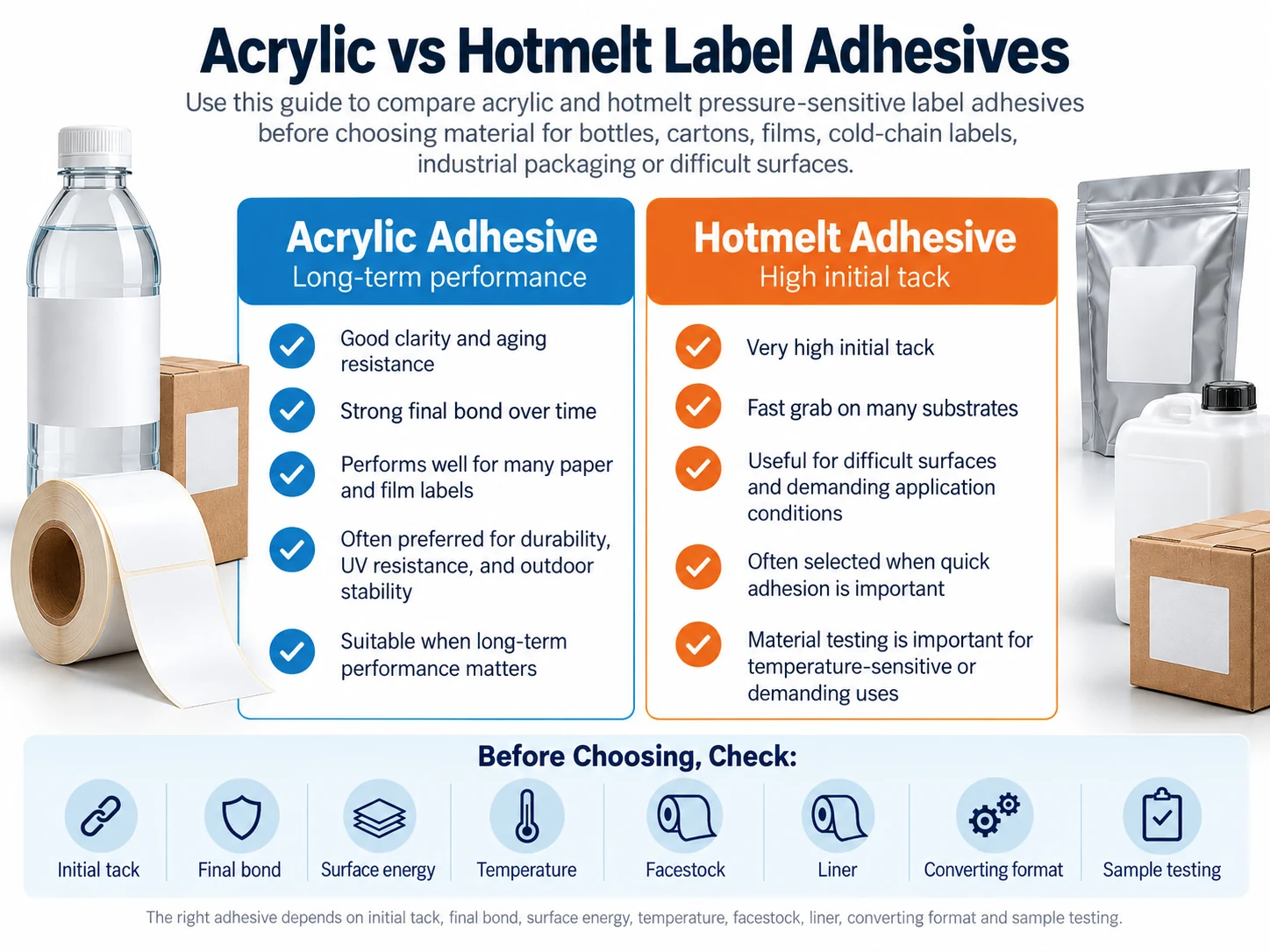
Acrylic or hotmelt?
Permanent acrylic is the default for product labelling: it is clear, ages well, resists UV and most chemicals, and holds shear at elevated temperature. It builds bond slowly, so judge it at 24 hours.
Hotmelt rubber grabs instantly and grips textured board, recycled fibre and low-energy plastics that acrylic struggles with. In exchange it softens above roughly 60 °C, yellows under prolonged UV, and can ooze at the die-cut edge if the roll is stored warm.
Application temperature is not service temperature
This is the single most common specification mistake. An adhesive rated for −20 °C storage may still need to be applied above +5 °C to wet out. If labels go onto product that is already frozen, you need a genuine cold-apply adhesive, not a standard permanent one.
- Applied warm, stored cold — standard permanent acrylic is usually fine.
- Applied below +5 °C — specify a cold-apply / freezer adhesive.
- Condensation at the moment of application — specify a wet-surface adhesive.
Difficult surfaces
Polypropylene, polyethylene, powder-coated metal and recycled corrugated all have low surface energy or heavy texture. High-tack hotmelt is the usual answer, sometimes with a smaller label footprint and rounded corners to reduce peel initiation.
| Surface / requirement | Adhesive | Note |
|---|---|---|
| Glass, ambient | General-purpose permanent acrylic | Clear, ages well |
| Chilled glass, condensation | Wet-surface high-tack hotmelt | Confirm ice-water immersion time |
| PET bottle, recycling | Wash-off alkaline-releasable | Validate at 1–2% NaOH, 80 °C |
| Frozen food, applied cold | Cold-apply freezer adhesive | Holds to −40 °C |
| Corrugated, recycled board | High-tack hotmelt | 24-hour bond build test |
| Drums, tyres, industrial | High-tack rubber permanent | Pair with PET or PP face |
Test before you commit
Ask for A4 samples on the actual container, apply them on the real line if possible, and read peel at 20 minutes and again at 24 hours. A bond that looks weak on day one is often correct by day two — and a bond that looks perfect immediately can still fail after a week in a chiller.
Frequently asked questions
- How long does an adhesive take to reach full bond?
- Most permanent acrylics reach around 80% of ultimate bond in 20 minutes and full bond in 24 hours as the adhesive wets out into the surface texture.
- Can one adhesive cover my whole product range?
- Often yes for similar containers, but freezer, wash-off and low-energy plastics genuinely need dedicated chemistries. Consolidating too far is what produces field failures.
If you are buying material before converting, start from label stock jumbo rolls and then narrow the facestock, adhesive and liner with our technical team.
Related materials
Related reading
More guides on adhesives and related topics
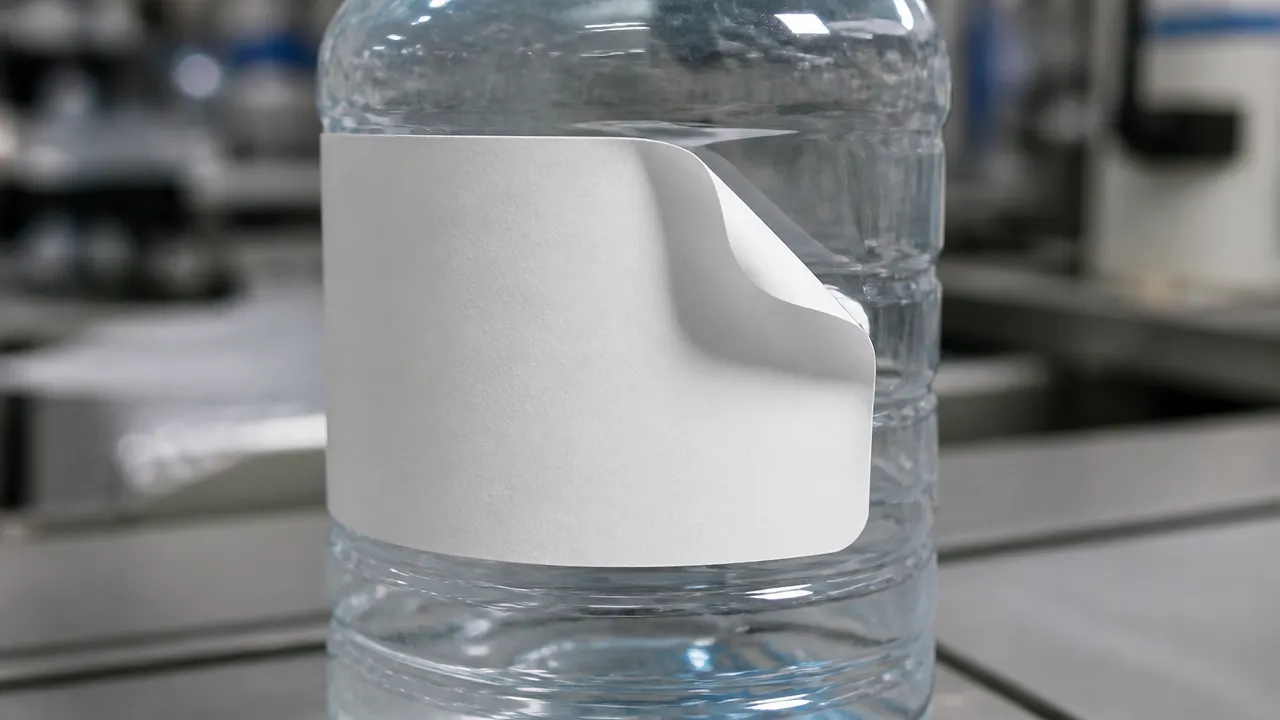 TroubleshootingWhy Pressure-Sensitive Labels Peel Off: Causes and TroubleshootingEdge lift is a diagnosis before it is a purchase. Work out when and where the label starts to release, then decide whether the adhesive, the facestock or the application process has to change.10 min read
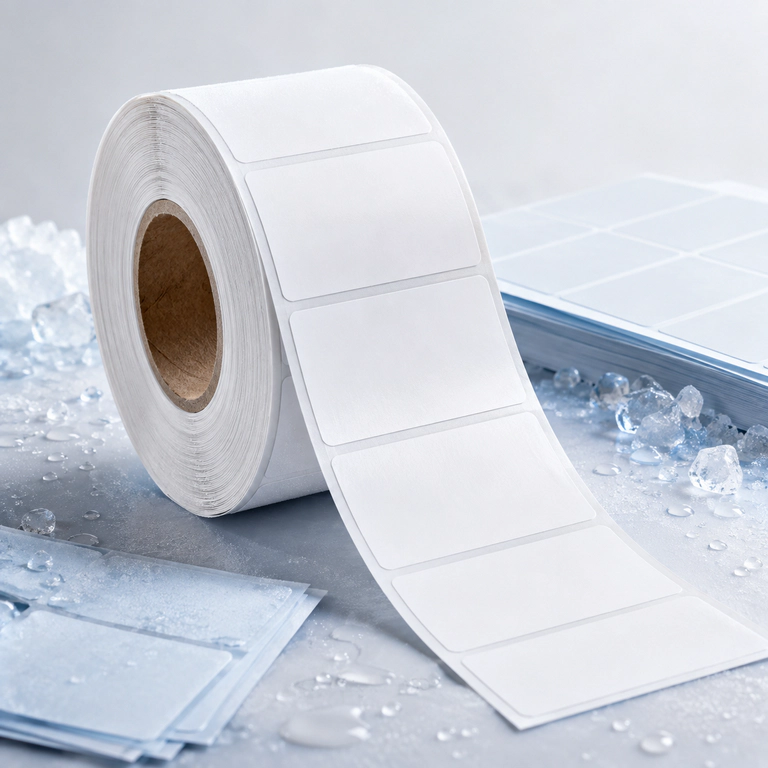 Material selectionLabel materials for cold chain and frozen foodFrozen labelling fails at two moments: the second of application, and the first defrost cycle. Both are adhesive problems.5 min read
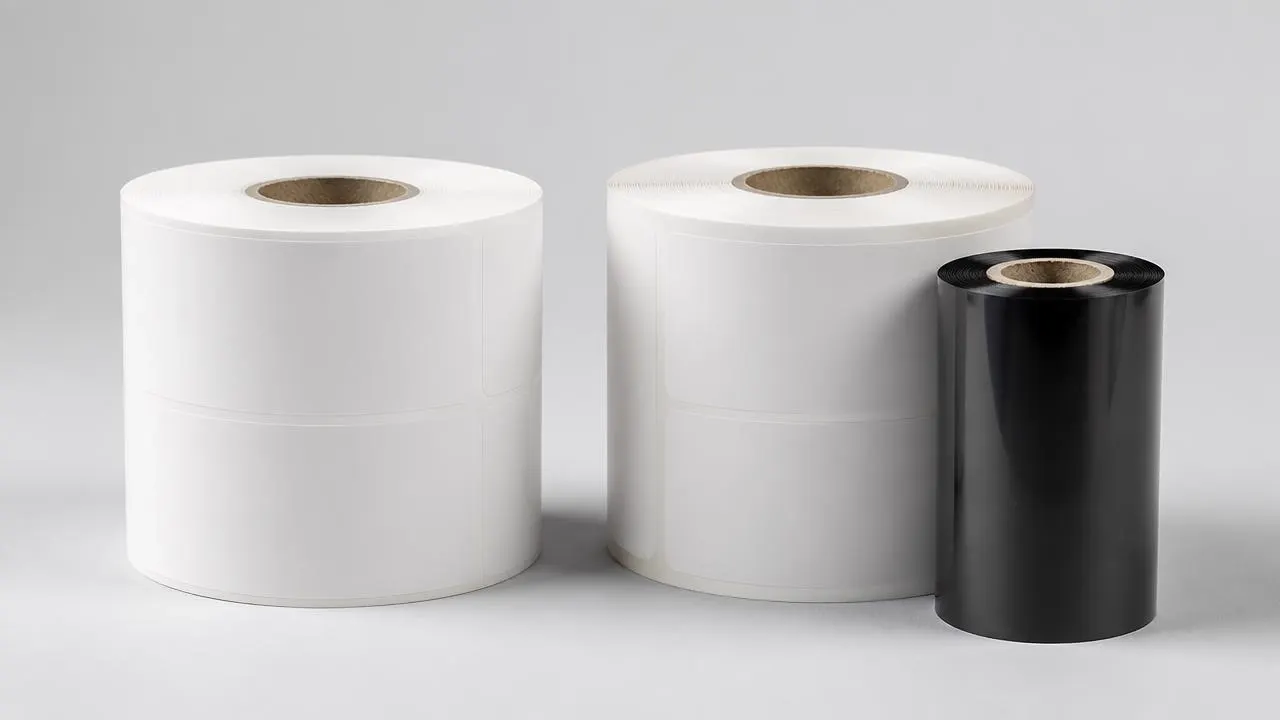 Thermal printingDirect Thermal vs Thermal Transfer Labels: Which Material Should You Choose?A practical material selection guide for converters, printers, warehouse label buyers and packaging teams choosing between direct thermal and thermal transfer label materials.11 min read
Request a quote or a free sample
Send us your facestock, adhesive, liner and roll specification. Low MOQ, OEM/ODM, export to 60+ countries.