
Comparison 07
Thermal EcoVSProtected Thermal
Thermal Eco vs. Protected (Top-Coated) Thermal Label Stock
Both materials form an image with heat from a direct thermal printer, without a ribbon. The engineering difference is the barrier above the heat-sensitive layer: Thermal Eco leaves that layer exposed, while Protected Thermal adds a clear protective topcoat. Select by exposure and required reading life, not by the word thermal alone.
Quick verdict
Thermal Eco is the lowest-cost direct thermal construction for dry, indoor, short-life shipping and weigh-scale labels. Protected (Top-Coated) Thermal adds a clear protective barrier over the heat-sensitive coating—and optionally on the reverse side—to resist moisture, condensation, hand oils, light abrasion, and plasticisers in chilled food, cold-chain, and multi-hub logistics.
Neither grade is permanent against high heat or long-term outdoor UV. If you need multi-year barcode legibility, solvent resistance, or high-temperature durability, compare Direct Thermal vs. Thermal Transfer labels or step up to Thermal Synthetic film.
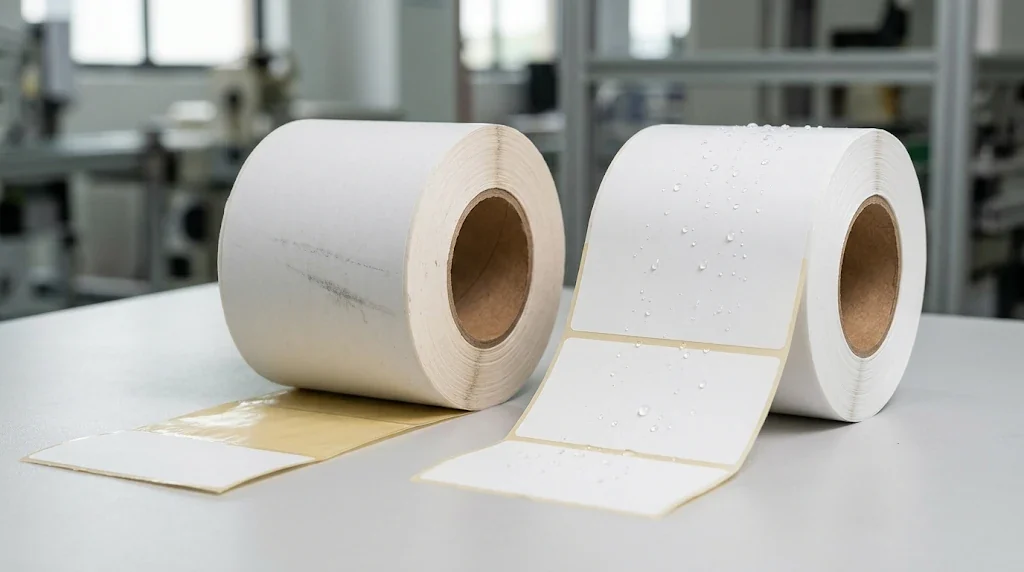
The difference is the protective coating structure
The diagrams show the facestock layers only. Adhesive and release liner are selected separately for the container, application temperature and converting line.
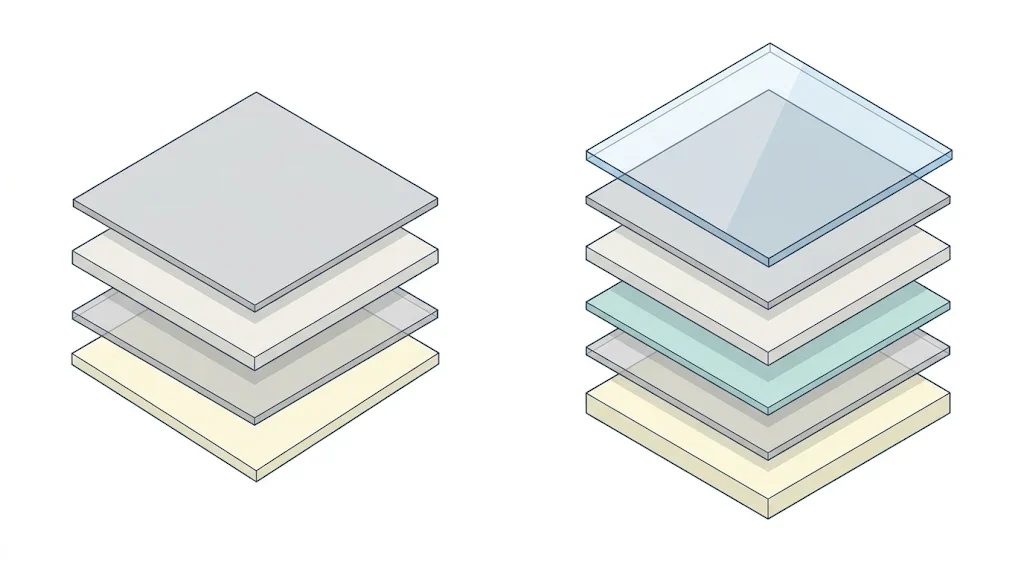
Thermal Eco
Uncoated- Thermal Layer
- Base Paper
Label surface ↑ · adhesive and liner not shown
Protected Thermal
Top-coated- Clear Protective Topcoat
- Thermal Layer
- Base Paper
- Optional Backside Barrier
Label surface ↑ · adhesive and liner not shown
Thermal Eco vs Protected Thermal: engineering comparison
| Attribute | Thermal Eco (Uncoated Direct Thermal) | Protected Thermal (Top-Coated Direct Thermal) |
|---|---|---|
| Surface structure | Base paper + heat-sensitive leuco dye layer (no protective top barrier) | Base paper + heat-sensitive layer + clear protective topcoat (often with backside barrier) |
| Moisture & condensation resistance | Low — damp handling or chilled condensation quickly smears or darkens image | Moderate to high — topcoat shields the thermal layer from light water splash and fridge condensation |
| Oil, grease & plasticiser resistance | Low — degrades rapidly on fatty foods, hand creams, or PVC cling wrap | Good — resists cooking oils, meat juices, and brief plasticiser contact (test specific wrap) |
| Abrasion & scuff resistance | Low — conveyor friction causes greying/scuff marks across barcodes | Higher — smoother barrier layer reduces friction marking on automated sorting lines |
| Printhead protection | Standard — exposed thermal layer leaves more residue over high print volumes | Better — smooth topcoat helps reduce thermal printhead wear and residue build-up |
| Typical indoor reading life | Short-term (days to a few months in dry ambient storage) | Medium-term (months up to ~1 year under controlled indoor conditions, depending on exposure) |
| Relative material cost | Lowest unit cost per square metre | Slightly higher than Eco, still lower total cost than thermal transfer + ribbon |
| Typical applications | Parcel courier labels, dry carton shipping, same-day bakery/deli weigh-scale | Chilled/frozen food packs, meat & seafood trays, multi-stage logistics & shipping, retail cold cabinets |
When Thermal Eco Is the Right Choice
- Dry e-commerce and courier parcels moving through a short domestic delivery window without rain or cold-store exposure.
- Same-day retail weigh-scale labels on dry bakery, produce, or ambient grocery items where the label is scanned at checkout within hours or days.
- Internal warehouse work-in-process (WIP) tags used in climate-controlled facilities where labels are discarded after picking.
When You Must Upgrade to Protected (Top-Coated) Thermal
- Chilled, refrigerated, or frozen packaging: Condensation during temperature transitions attacks uncoated thermal paper almost immediately. Pair top-coated facestock with a verified freezer-grade adhesive for cold-chain lines (see our cold-chain and frozen food label guide).
- PVC wrap, meat, cheese, and oily surfaces: Plasticisers in stretch wrap and fats in food migrate into uncoated thermal coatings, causing printed barcodes to fade rapidly.
- High-speed automated sorting conveyors: Conveyor belts and carton-to-carton rubbing generate frictional heat that darkens uncoated Eco paper into unreadable grey streaks.
- High-volume print-and-apply lines: A smooth protective topcoat reduces abrasive wear on expensive thermal printheads over millions of linear metres.
Step up when exposure increases
When neither thermal paper is enough
For persistent wet exposure, aggressive chemicals, outdoor service or a longer durable-identification requirement, step up from coated paper to a suitable film and print system. Define the exposure first, then test the complete label construction.
Common Specification Mistakes to Avoid
- Mistake 01
Assuming "top-coated" guarantees freezer adhesion
The topcoat only protects the printed image surface. Low-temperature bonding depends entirely on selecting a matched freezer or all-temperature adhesive and checking application temperature separately from service temperature.
- Mistake 02
Assuming Protected Thermal paper is tear-proof or fully waterproof
Even with a topcoat, paper fibres absorb moisture from cut edges during prolonged immersion. For wet outdoor yards, chemical drums, or tear-proof baggage tags, evaluate Thermal Synthetic (PP/BOPP direct thermal film) or thermal transfer with resin ribbon.
- Mistake 03
Ignoring adhesive-side barrier needs on hot-melt constructions
Hot-melt adhesives contain oils and tackifiers that can migrate from the back of the paper into the thermal layer under warm warehouse storage, turning labels prematurely dark. Specify a backside barrier (back-coat) when pairing thermal paper with aggressive hot-melt adhesives.
- Mistake 04
Overlooking BPA/BPS-free market requirements
Many European and North American retail programmes restrict bisphenol-A (BPA) or bisphenol-S (BPS) developers. Confirm phenol-free / BPA-free status on the current construction TDS before ordering.
Frequently asked questions
Can I tell Thermal Eco and Protected Thermal apart with a simple hand test?
A quick screening check is the fingernail scratch test and a drop of water or vegetable oil: Eco paper marks dark very easily when scratched firmly and darkens or smears rapidly when rubbed with oil, whereas Protected Thermal resists light scratching and slows moisture/oil penetration. Always confirm the exact grade via the batch TDS rather than a desk test alone.
Does Protected Thermal require higher printhead energy (darkness setting) than Thermal Eco?
Often slightly higher, because heat must travel through the protective topcoat to activate the thermal layer beneath. Converters and end users should verify print darkness and print speed on their actual printer model during a trial roll run.
Why did my top-coated thermal labels still fade after wrapping in PVC film?
Topcoats vary in barrier formulation and coat weight. High-plasticiser PVC wraps, warm display cases, and prolonged contact can still degrade standard topcoats. Specify PVC-wrap contact in your enquiry so an appropriate top-coated or synthetic grade can be sampled and tested.
When should I switch from Protected Thermal to Thermal Transfer?
Switch to Thermal Transfer when labels must survive heat above ~60 °C, direct sunlight/UV, chemical solvents, or multi-year archival and pallet storage where any direct thermal chemistry will eventually darken or fade.
Related materials & next steps
- Thermal Eco label material
- Protected Thermal label material
- Thermal Synthetic label material
- Thermal Transfer label material
- Semi-gloss paper vs white BOPP
- Acrylic vs hotmelt label adhesive
- Get a label material quote
Request a quote or discuss sample options
Send the requested facestock, adhesive, liner, roll format, quantity and destination. Construction availability, documentation, sample terms, MOQ and timing require confirmation.